Alcyonacea
Former order of soft corals now placed in Malacalcyonacea and Scleralcyonacea.

Kükenthal, W. G. (Willy Georg), 1861-1922 · No restrictions
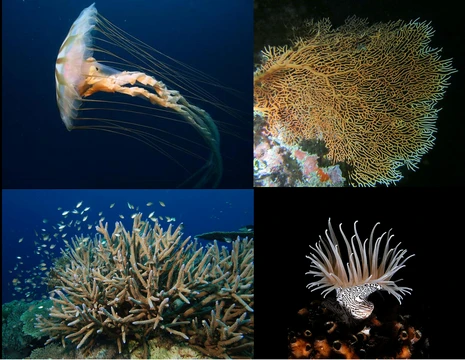
Alcyonacea, also known as soft corals or alcyonacians, is a former order (or suborder) of Octocorallia. These sessile colonial cnidarians are found throughout the world's oceans, especially in deep sea, polar waters, tropics, and subtropics, and are commonly known as soft corals, though the term also includes gorgonians, sea fans, and sea whips.
- classification
- Former order (or suborder) of Octocorallia
- common_names
- Soft corals, alcyonacians, gorgonians, sea fans, sea whips
- habitat
- Worldwide oceans, especially deep sea, polar waters, tropics, subtropics
- key_feature
- Sessile colonial cnidarians with eight-tentacled polyps and sclerites
- number_of_species
- About 500 species of gorgonians known
Lore & Background
Alcyonacea were defined in three ways: as suborder Alcyoniina; as including Alcyoniina, Stolonifera, Telestacea, and Protoalcyonaria; or in the broadest sense also including Scleraxonia, Holaxonia, and Calcaxonia (formerly order Gorgonacea). The broadest definition is used in the source article, which notes the text is a historical, outdated treatment of Anthozoa and Octocorallia. Soft corals contain minute spiny sclerites that give support and deter predators. Some species, like the leather-coral genus Sinularia, can cement sclerites into alcyonarian spiculite, making them reef builders. Unlike stony corals, most soft corals thrive in nutrient-rich waters with less intense light and use symbiotic zooxanthellae as a major energy source, though they also eat free-floating food like zooplankton. Gorgonians produce unusual organic compounds, particularly diterpenes, which are candidates for new drugs and may serve as chemical defenses. Bottlenose dolphins in the Red Sea have been observed swimming against gorgonian tissues, possibly to take advantage of antimicrobial qualities. Despite these defenses, gorgonians are prey for flamingo tongue snails, nudibranchs, fireworms, and butterflyfishes.
Reader's Guide
The order's content is now split between Malacalcyonacea and Scleralcyonacea. Despite this taxonomic change, the organisms themselves remain ecologically significant as integral members of reef ecosystems, providing habitat for fish, snails, algae, and other marine species. Their ability to form colonies that are erect, flattened, branching, or encrusting, and their bright colors (often purple, red, or yellow), make them notable in both natural and aquarium settings. Gorgonians are particularly abundant in shallow waters of the Western Atlantic, including Florida, Bermuda, and the West Indies. The skeletal growth rate and composition of gorgonin and calcite in long-lived species are useful in paleoclimatology and paleoceanography. Many soft corals are easily collected for the reef aquarium hobby, and home-grown specimens are often more adaptable and help conserve wild reefs. The legacy of Alcyonacea lies in its historical role as a catch-all for soft corals and gorgonians, now better understood through modern phylogenetic revisions.
Did You Know?
- Some soft corals, like the genus Sinularia, can cement sclerites into alcyonarian spiculite, making them reef builders.
- Gorgonians produce diterpenes, which are important candidates for new drugs and may have antimicrobial properties.
- Pygmy seahorses, such as Hippocampus bargibanti, are obligate residents on certain gorgonian species.
Taxonomic Identity and Its Shifting Boundaries
Alcyonacea, widely recognized in English as soft corals or alcyonacians, carries a notably fluid taxonomic identity. Even before that overhaul, authors disagreed on how broadly to draw the group's borders. In the narrowest reading, Alcyonacea is synonymous with the suborder Alcyoniina. A mid-range interpretation folds in Stolonifera, Telestacea, and Protoalcyonaria. This layered disagreement means that a single common name can mask several distinct formal arrangements, making the group's precise boundaries a persistent point of discussion among coral systematists.
Skeletal Architecture and Physical Form
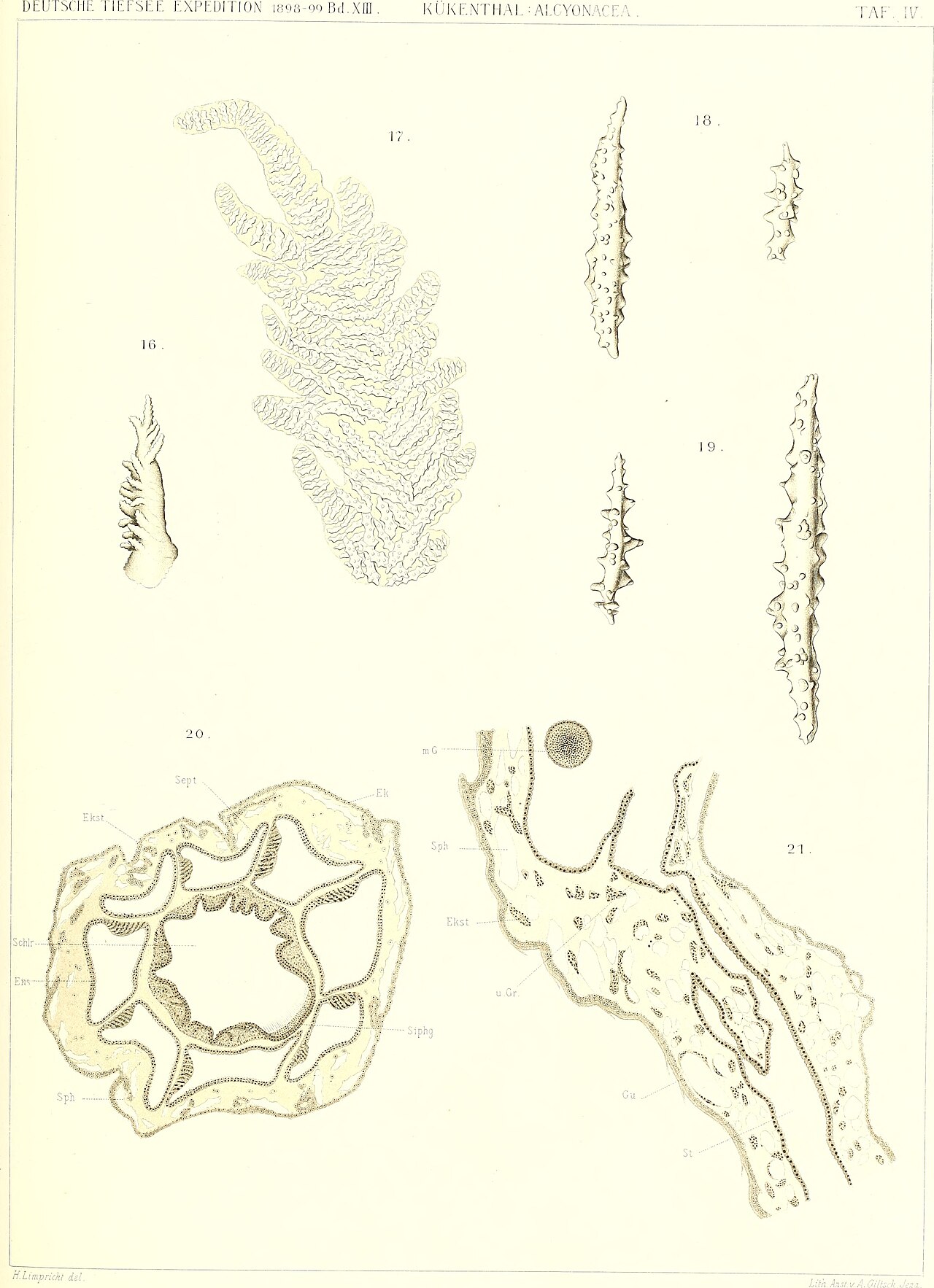
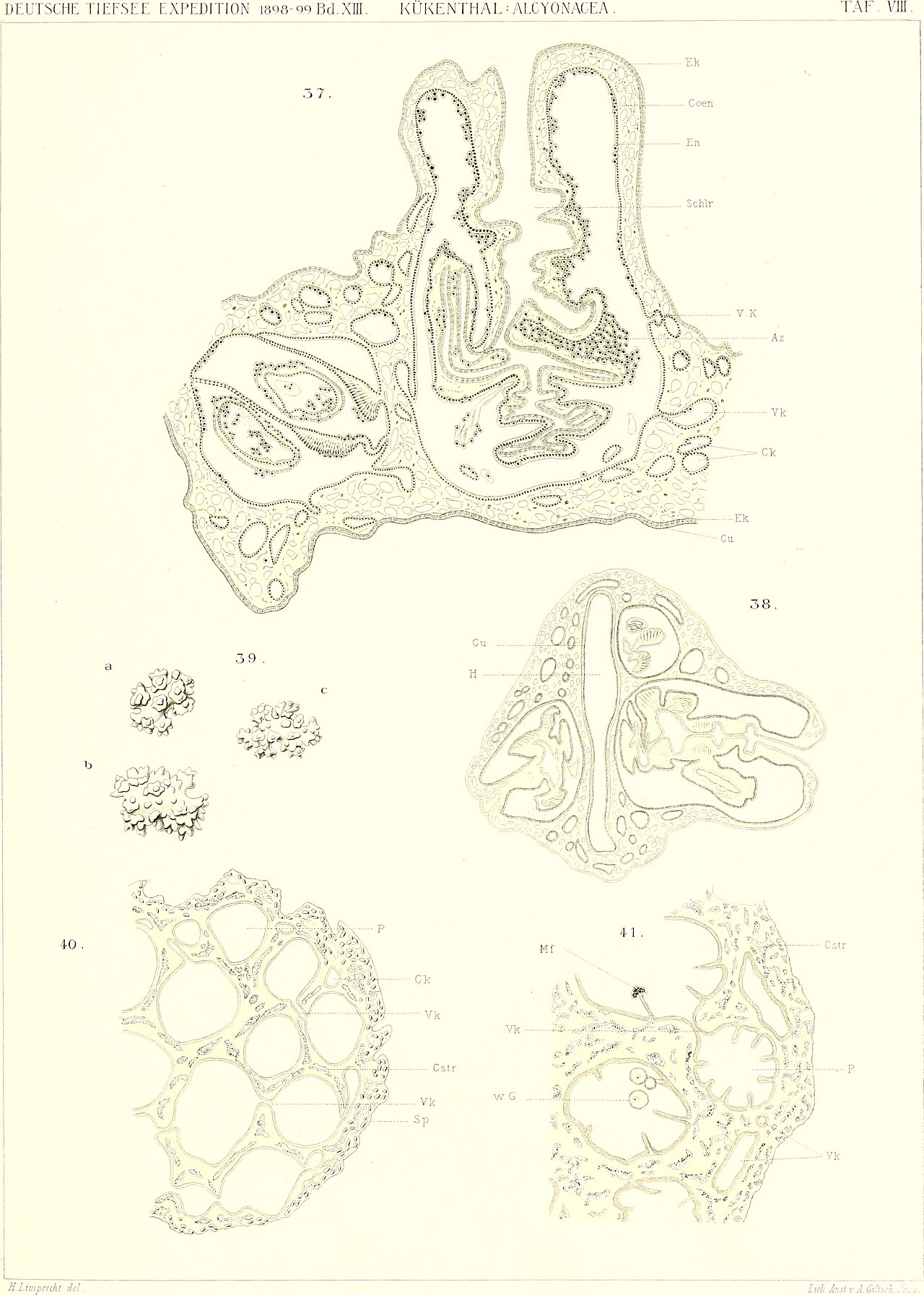
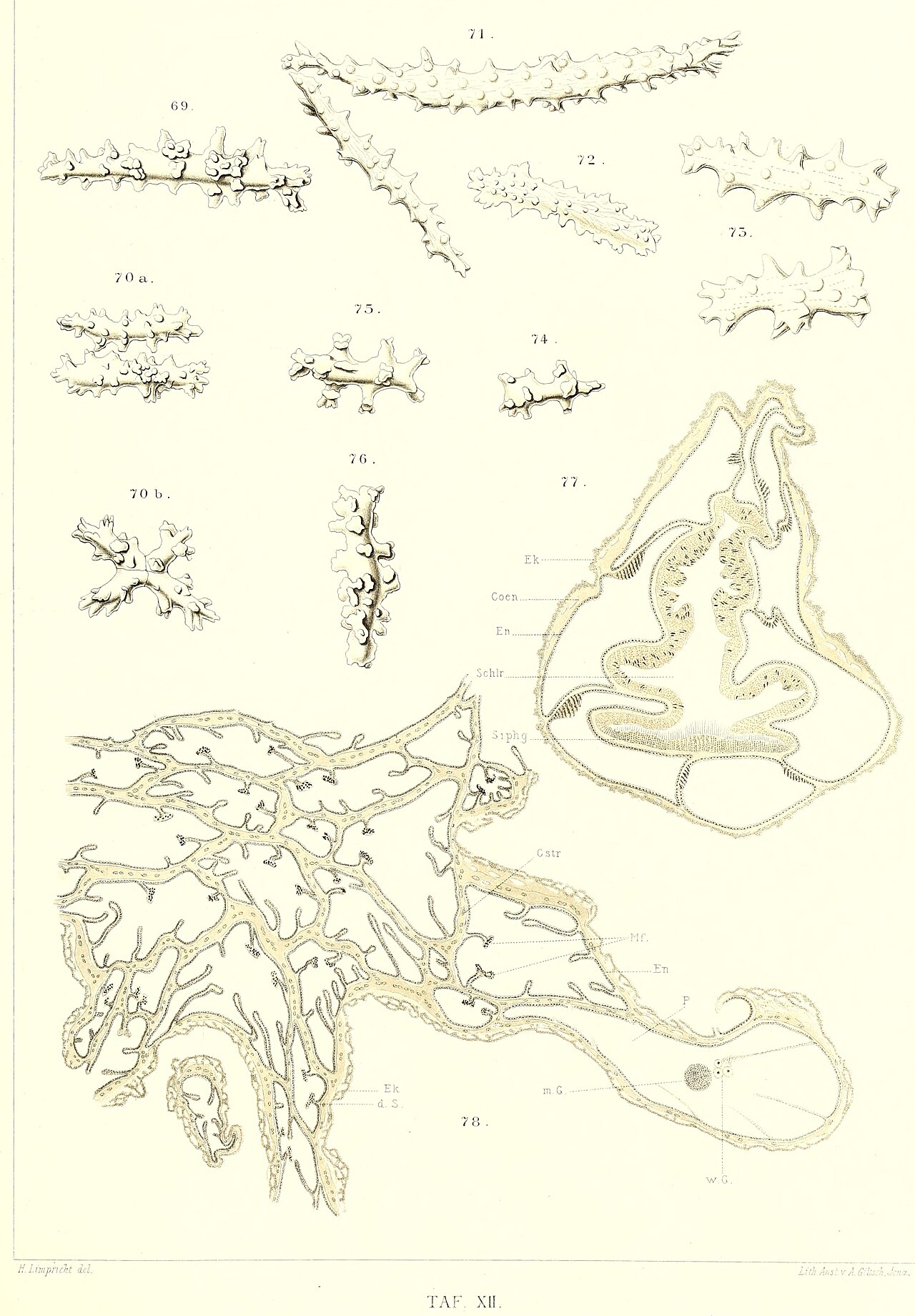
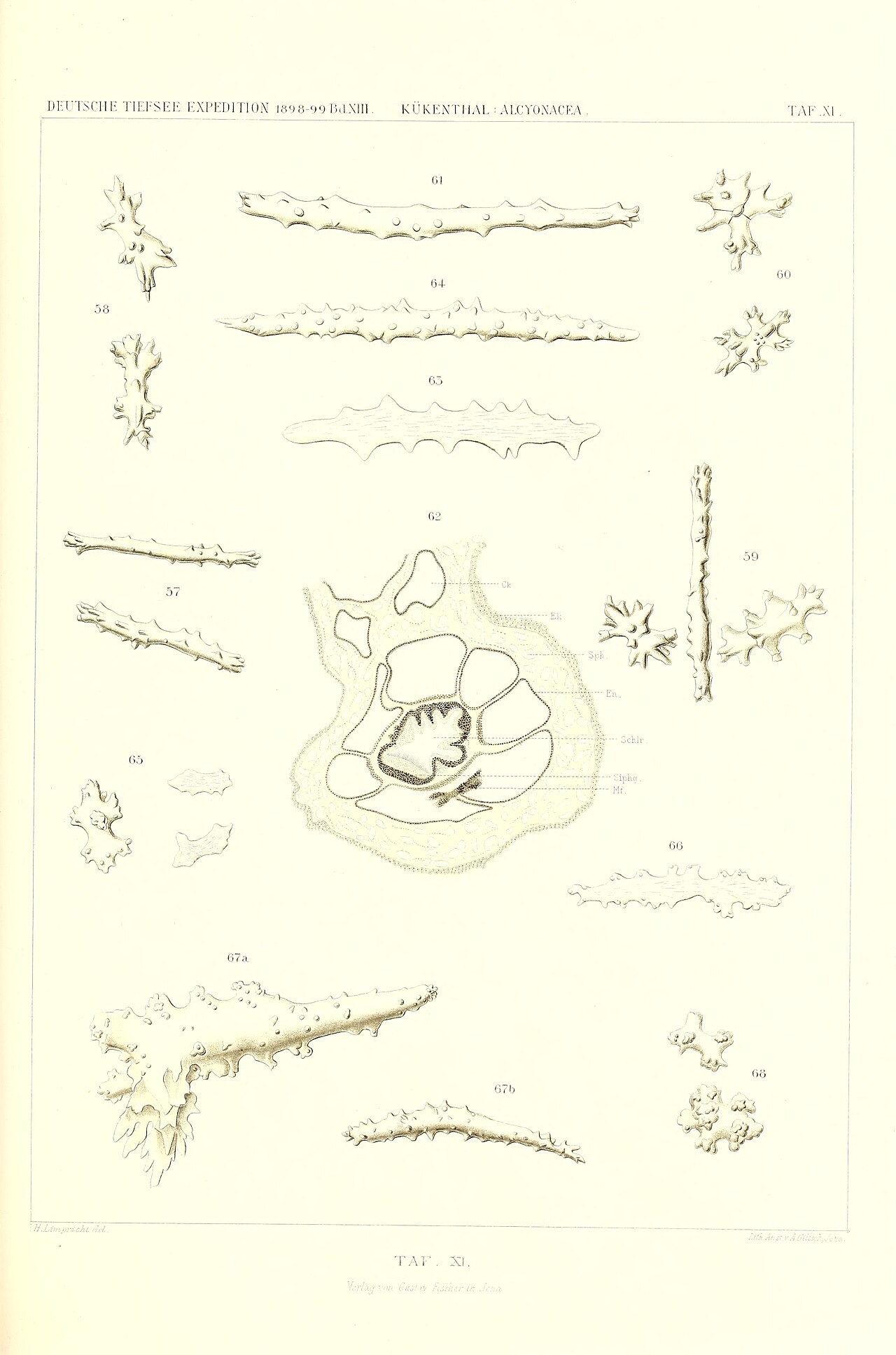
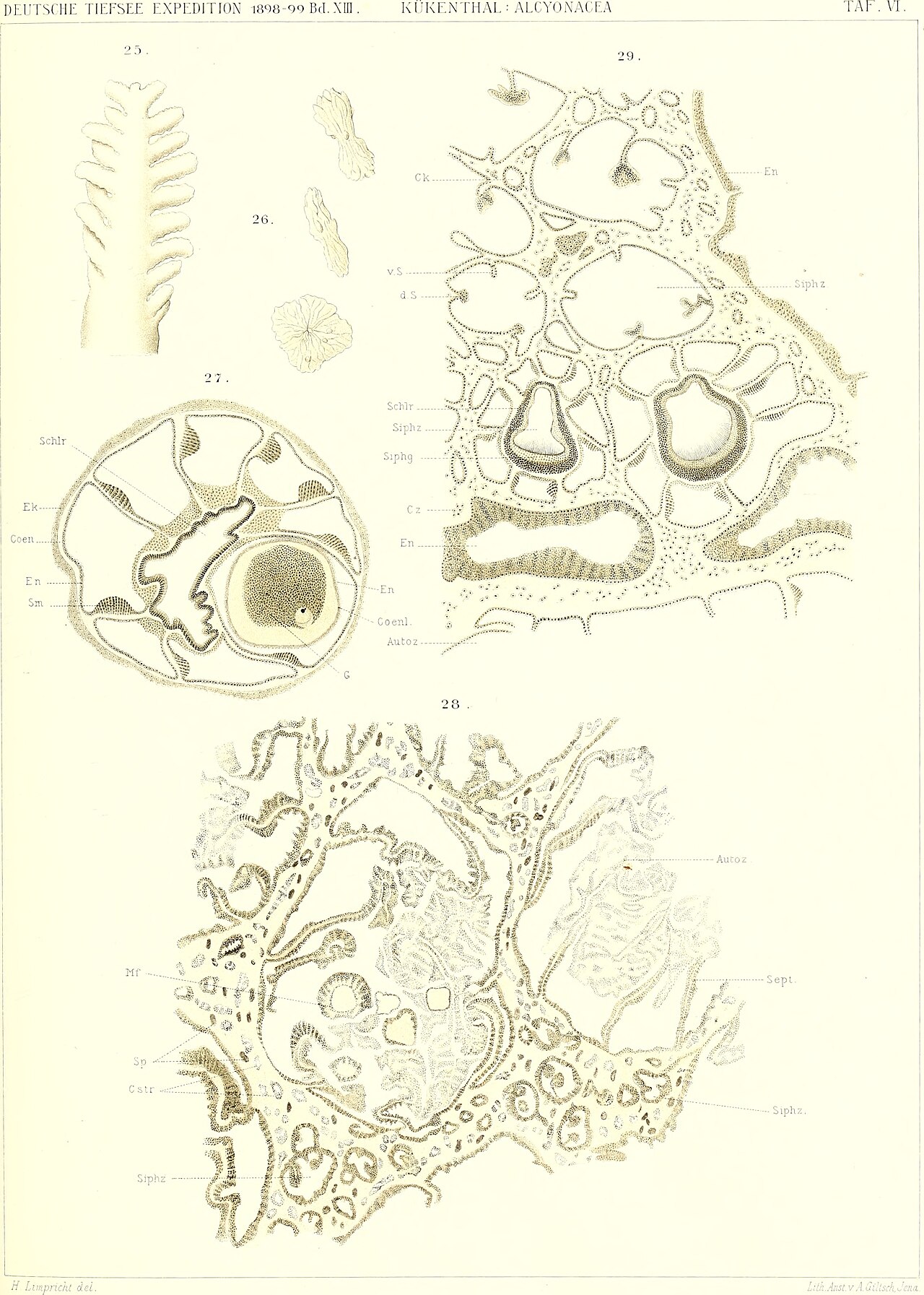
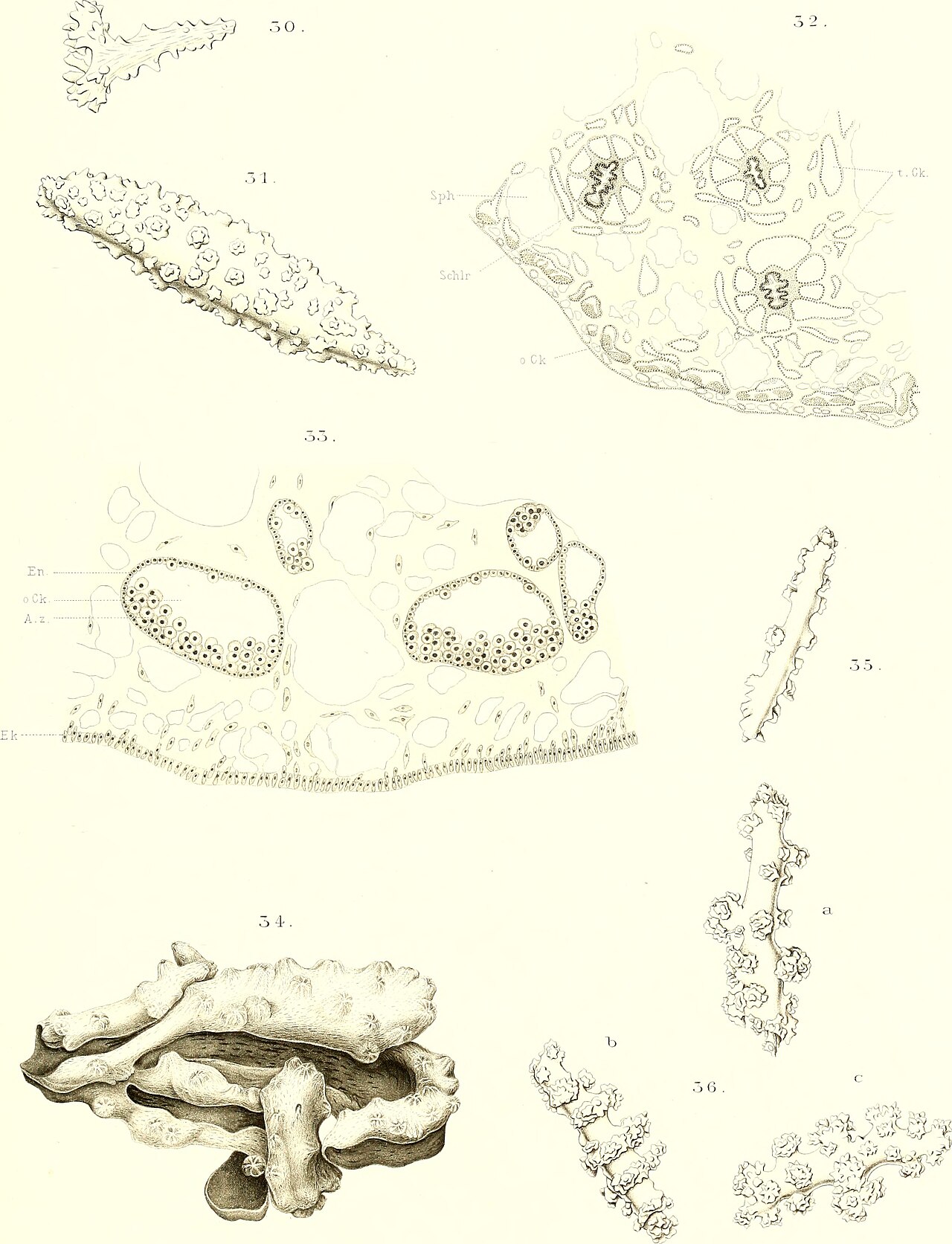
The internal architecture of alcyonacian colonies shifts dramatically across its constituent suborders. Holaxonia species build their frameworks from gorgonin, a flexible, horny protein found nowhere else in the animal kingdom, which distinguishes their skeletons sharply from the calcium carbonate structures of true stony corals. Scleraxonia members, by contrast, depend on densely clustered calcareous spicules for rigidity, while certain species settle into an encrusting growth pattern. Across the wider group, tiny spiny elements known as sclerites are scattered through the flesh, lending modest structural support and producing a spiky, grainy surface texture that discourages would-be predators. These same sclerites remain a primary tool for distinguishing one species from another. Colonies typically assume erect, flattened, branching, fan-shaped, whiplike, bushy, or encrusting forms, spreading several feet across yet remaining only a few inches thick. Their coloration is frequently vivid—deep purples, bright reds, or saturated yellows—making them among the most visually arresting organisms on a reef.
Feeding Strategies and Habitat Relationships
Every individual polyp in a gorgonian colony extends exactly eight tentacles into the surrounding water to trap plankton and suspended particles, a feeding mode known as filter feeding. Colonies maximize this intake by orienting their fan-shaped bodies perpendicular to prevailing currents, ensuring a continuous stream of food-laden water passes across their polyps. Many species additionally host symbiotic photosynthetic algae called zooxanthellae, which supplement the colony's energy intake through photosynthesis; polyps carrying these algae typically display a brownish hue. Gorgonians are most abundant in shallow waters, yet some species have been recorded at depths of several thousand feet. Their morphology tracks their environment: broad, flexible fans dominate shallow, high-current zones, while taller, thinner, stiffer forms are characteristic of deeper, calmer waters. Beyond their own nutritional needs, these colonies function as vital habitat, sheltering fish, snails, algae, hydrozoans, bryozoa, brittle stars, and even pygmy seahorses within their branching frameworks.
Scientific Value and the Aquarium Trade
Alcyonacians serve important roles in both scientific research and the recreational aquarium industry. In paleoclimatology and paleoceanography, the gorgonin and calcite deposited in the skeletons of long-lived gorgonian species provide a detailed archive, since skeletal growth rates and chemical composition track seasonal and climatic shifts with high fidelity. In the reef aquarium hobby, soft corals are favored because small cuttings survive shipping with less damage or infection than stony corals, and they grow quickly in captivity, readily dividing into new individuals. Aquaculture-grown specimens are generally hardier and more affordable than wild imports, and cultivating them at home reduces harvesting pressure on natural reefs. Ecologically, these corals are indispensable reef members, and recent findings have shown that colonies of the leather-coral genus Sinularia can cement sclerites at their base to form alcyonarian spiculite, effectively acting as reef builders—a discovery that overturns the long-held assumption that soft corals cannot lay new foundations for future coral growth.
Gallery
Frequently Asked Questions
Who is Alcyonacea?
Alcyonacea is a former order (or suborder) within Octocorallia that fans and field biologists have long called soft corals, alcyonacians, gorgonians, sea fans, or sea whips. It grouped together sessile colonial cnidarians whose polyps bear eight tentacles and whose bodies are reinforced by tiny calcareous sclerites rather than a hard external skeleton.
What are Alcyonacea's powers or role?
Alcyonacea members are sessile colonial organisms that build branching or encrusting frameworks in the water column, using their eight-tentacled polyps to filter-feed on plankton. Internal sclerites provide structural support while allowing the colonies to flex and sway with ocean currents.
Why is Alcyonacea important?
With roughly 500 known gorgonian species, these soft corals create essential three-dimensional habitat in deep-sea, polar, tropical, and subtropical waters around the globe. They shelter diverse fish, invertebrate, and microbial communities and are widely used as indicators of overall ocean health.
Where can you find Alcyonacea?
Former Alcyonacea species are distributed across the world's oceans, with especially dense assemblages in deep-sea environments, polar seas, and warm tropical and subtropical reefs. Their near-cosmopolitan range makes them one of the most geographically widespread cnidarian groups.
More in Cnidarians 1-18
Spotted an error? Know more?
This is a living reference — every entry is fact-audited, and reader corrections feed straight into our audit queue. Suggest an edit · See this site's audit record