Scyphozoa
Exclusively marine class of true jellyfish, from Cambrian to present.

Auckland Museum Collections from Auckland, Aotearoa New Zealand · CC BY 2.0
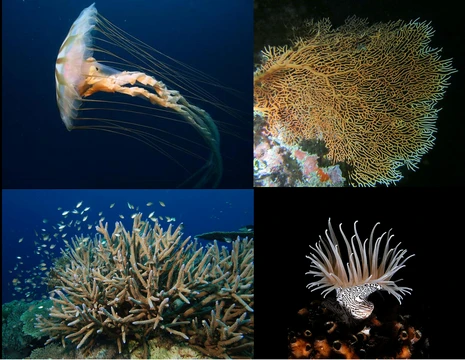
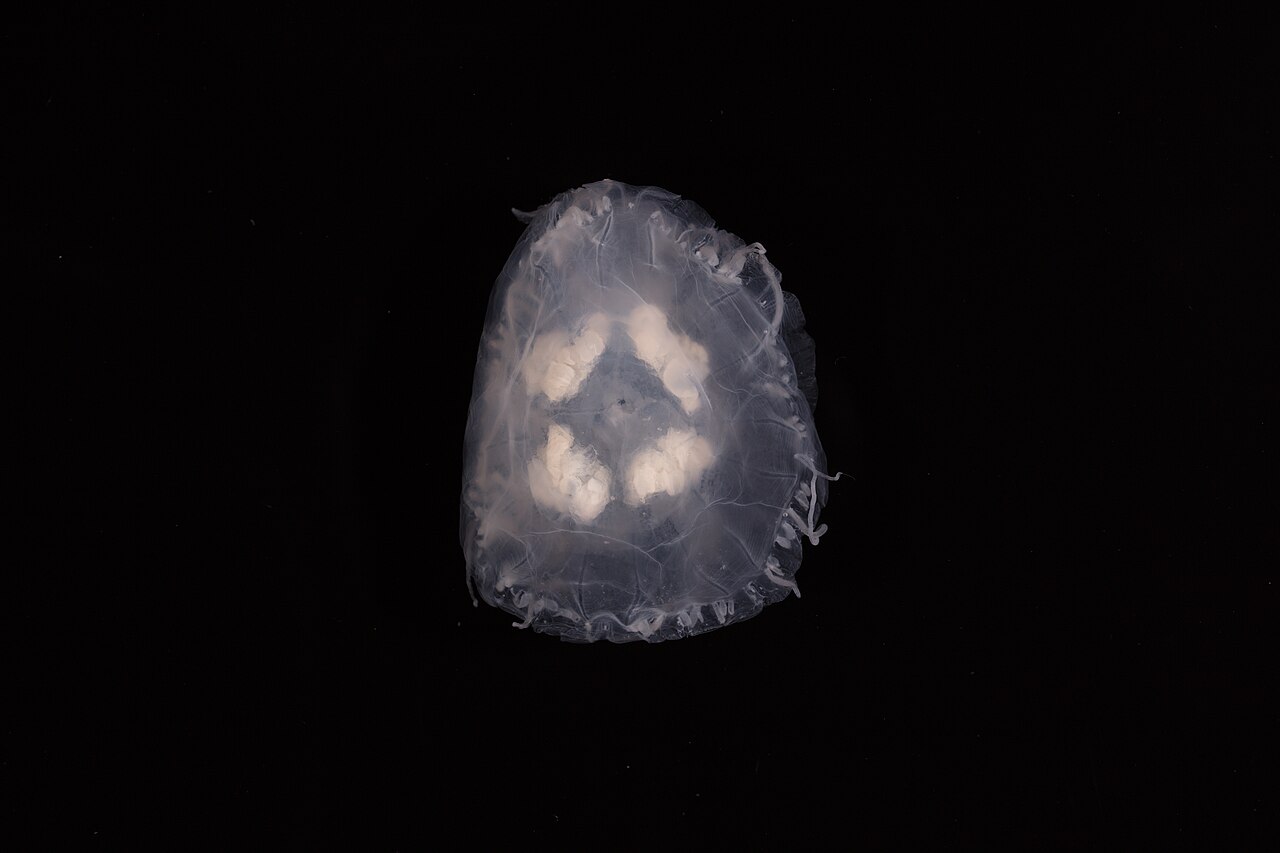
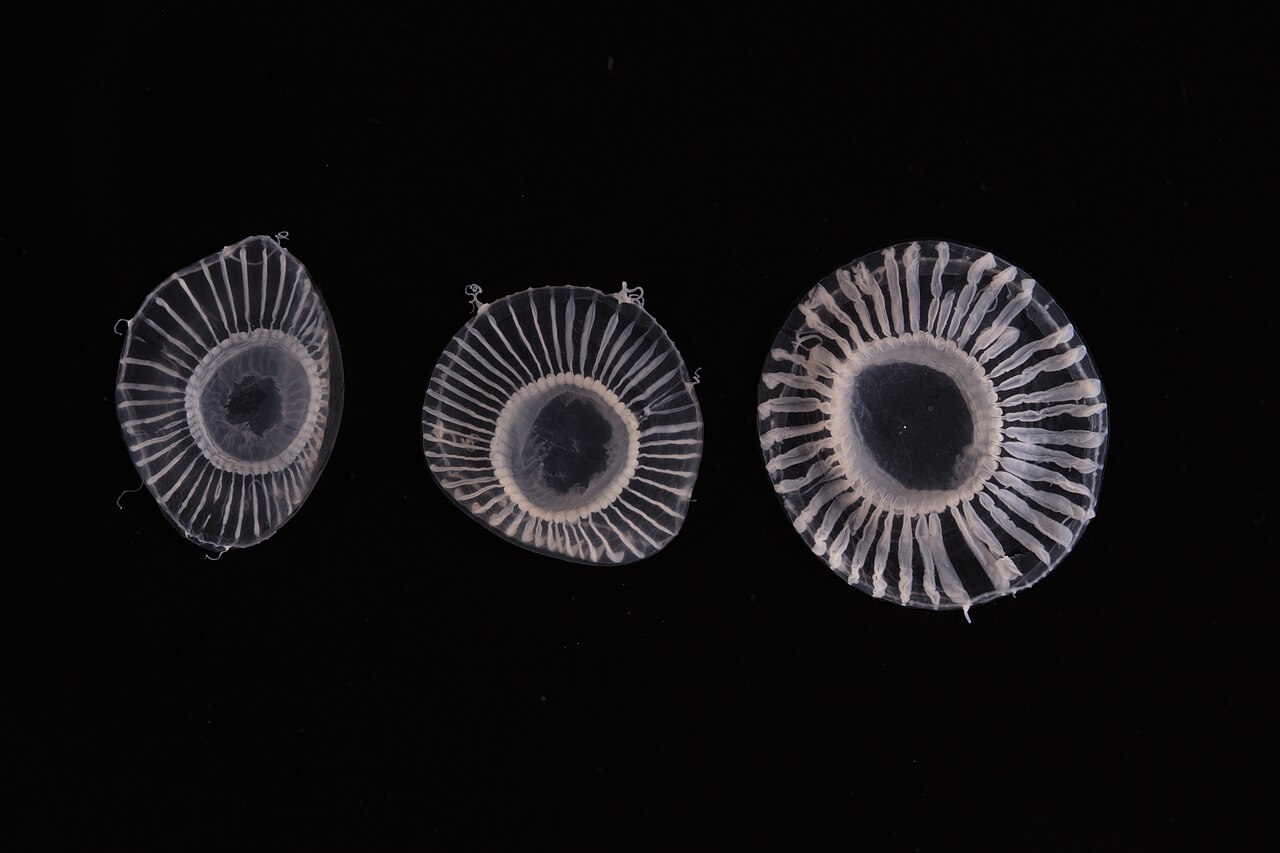
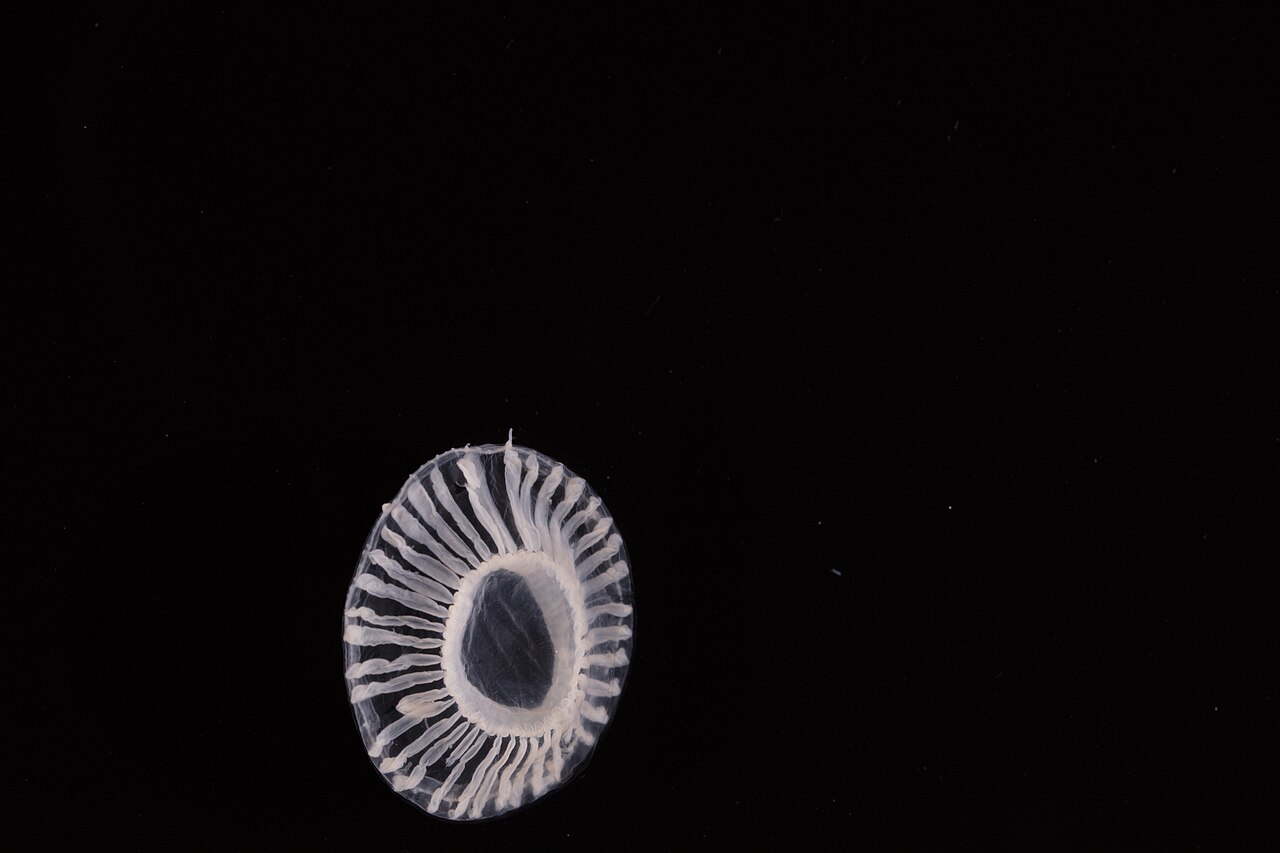
The Scyphozoa are an exclusively marine class of the phylum Cnidaria, referred to as the true jellyfish (or 'true jellies'). The class name Scyphozoa comes from the Greek word skyphos (σκύφος), denoting a kind of drinking cup and alluding to the cup shape of the organism. Scyphozoans have existed from the earliest Cambrian to the present. Most of the large, often colorful, and conspicuous jellyfish found in coastal waters throughout the world are Scyphozoa.
- field
- Marine biology, Cnidaria
- known_for
- True jellyfish; cup-shaped medusae; two life-history phases; stinging cells (nematocysts); commercial food source
- size_range
- 2 to 40 cm (1 to 15+1/2 in) diameter; largest Cyanea capillata reaches 2 m
- habitat
- World's oceans, surface to great depths; no freshwater or land occurrence
Lore & Background
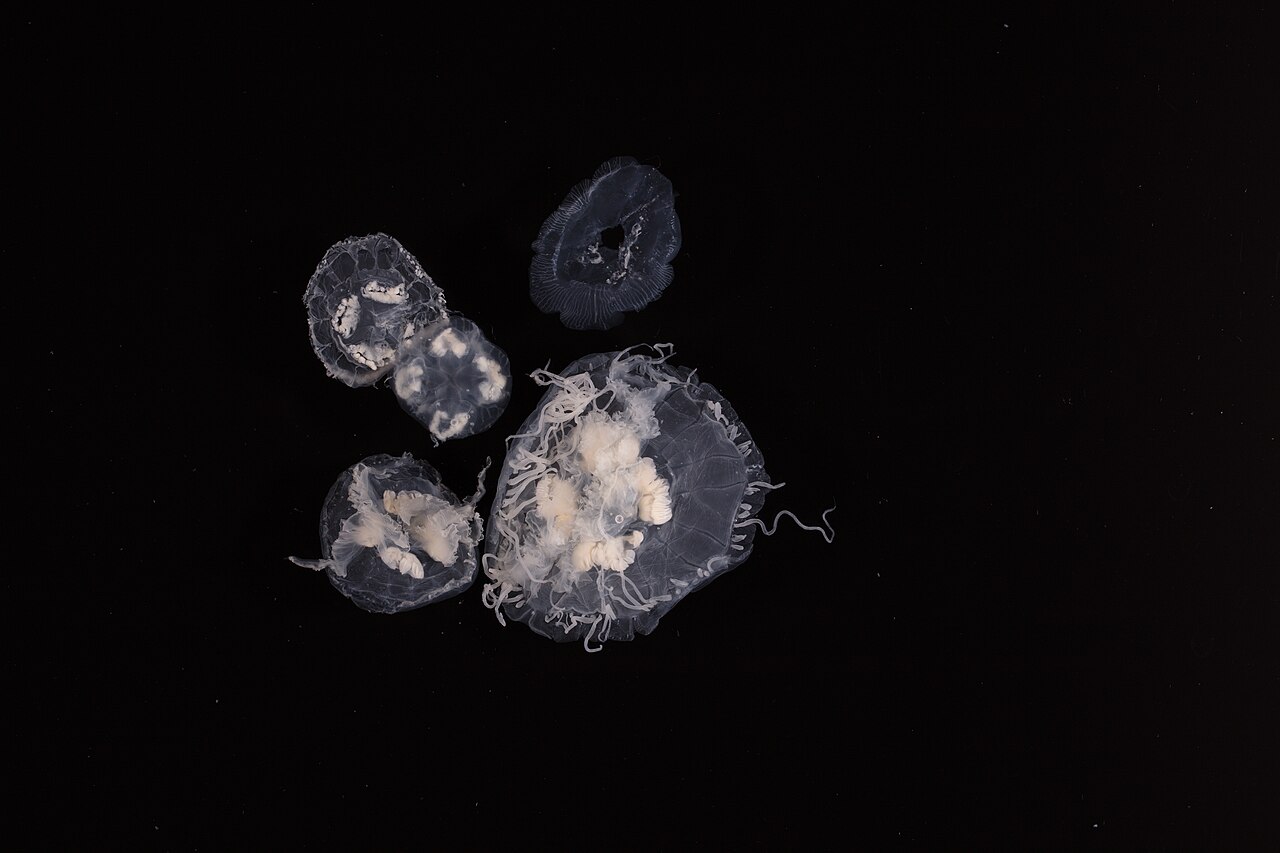
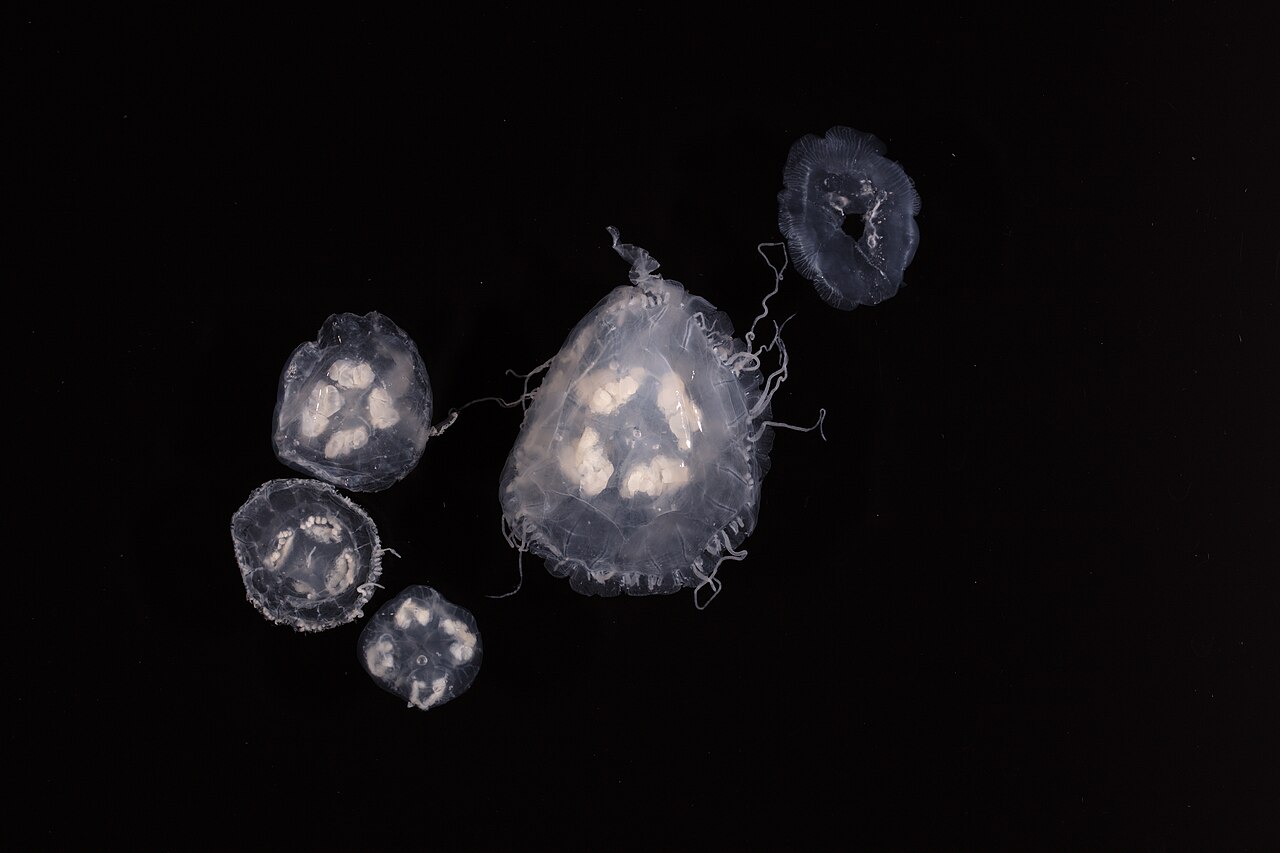
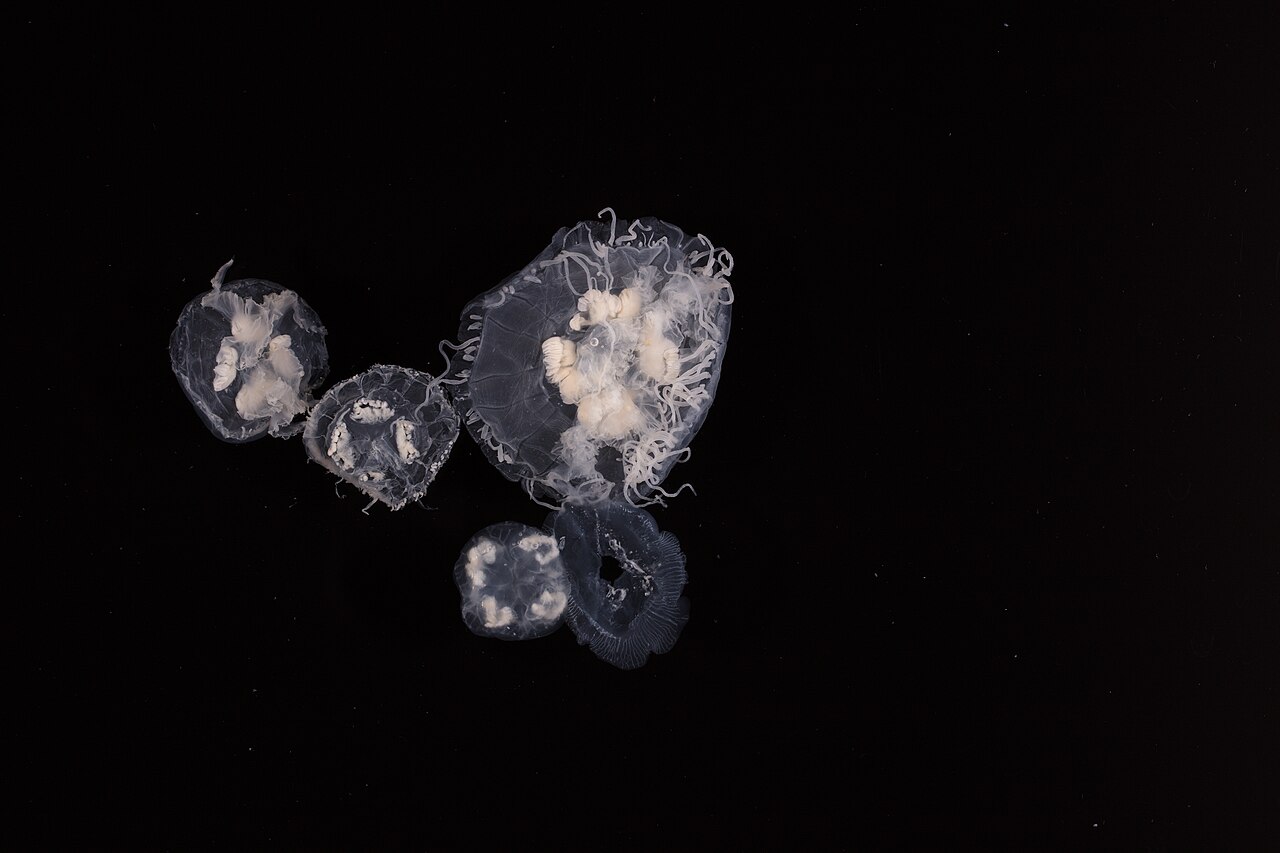
Scyphozoa have two life-history phases: a planktonic medusa or polyp form, most evident in warm summer months, and a longer-lived, bottom-dwelling polyp that seasonally gives rise to new medusae. As medusae, they eat crustaceans and fish captured using stinging cells called nematocysts, located on tentacles and oral arms; some species are filter feeders. Most species are gonochorists, with separate males and females; gametes are expelled through the mouth, and after fertilization, some brood young on oral arms, but they are more commonly planktonic. The fertilized egg produces a planular larva that attaches to the sea bottom and develops into a tiny sessile polyp called a scyphistoma. The scyphistoma reproduces asexually by budding and then either transforms into a medusa or buds several medusae via strobilation. Medusae are initially microscopic and may take years to reach sexual maturity. Scyphozoans usually display four-part symmetry, have internal gelatinous mesoglea with amoeboid cells, and lack hard parts, a head, skeleton, or specialized respiratory/excretory organs. They swim by contracting and relaxing a ring of muscle fibers around the rim of the dome. Scyphozoa include the moon jelly Aurelia aurita and the enormous Nemopilema nomurai, which can cause major fisheries disruptions. Jellyfish fished commercially for food are Scyphomedusae in the order Rhizostomeae, mostly living in warm water.
Reader's Guide
Scyphozoa, the true jellyfish, are a class of exclusively marine cnidarians that have persisted from the earliest Cambrian to the present. Their significance lies in their ecological role as predators and filter feeders in ocean ecosystems, consuming crustaceans, fish, and plankton. They are also notable for their complex life cycle, alternating between a conspicuous medusa stage and a longer-lived, bottom-dwelling polyp stage. Commercially, Scyphozoa are important as a food source, particularly rhizostome jellyfish fished in warm waters, and species like Nemopilema nomurai can disrupt fisheries. Their anatomy—featuring four-part symmetry, mesoglea, nematocysts, and a distributed nervous system—illustrates key adaptations of cnidarians. Scyphozoa lack hard parts, making fossil preservation rare, but their ancient lineage and modern abundance underscore their enduring presence in marine environments.
Did You Know?
- The class name Scyphozoa comes from the Greek word skyphos, meaning a drinking cup, alluding to the cup shape of the organism.
- Scyphozoans have existed from the earliest Cambrian to the present.
- The largest species, Cyanea capillata, can reach 2 metres (6 ft 7 in) across.
- Jellyfish fished commercially for food are Scyphomedusae in the order Rhizostomeae.
Gallery
Frequently Asked Questions
What exactly is Scyphozoa?
Scyphozoa is the class of cnidarians commonly called the true jellyfish, set apart by their distinctive cup-shaped medusa body plan. The name is borrowed from an ancient Greek word for a drinking vessel, a nod to that characteristic bowl-like form.
How large can Scyphozoa get?
Most species fall between roughly 2 and 40 centimeters in bell diameter, but the giant Cyanea capillata can stretch to about 2 meters across. That gives the class a surprisingly wide size range for a single taxonomic group.
Where do Scyphozoa live?
These organisms are strictly saltwater dwellers, ranging from sunlit surface waters to the deep ocean across every continent's coastlines. You will never find them in freshwater or on land.
How old is the Scyphozoa lineage?
Fossil evidence places true jellyfish in the seas going all the way back to the Cambrian period, making them one of the oldest continuously surviving animal groups on the planet. That works out to well over 500 million years of unbroken evolutionary history.
What makes Scyphozoa stand out from other jellyfish classes?
They are the group most people picture when they think of a classic jellyfish, with large, often vividly colored bells and trailing tentacles dominating coastal waters worldwide. They also cycle through two distinct life stages and rely on nematocysts—specialized stinging cells—for both catching prey and defense.
More in Cnidarians 1-18
Spotted an error? Know more?
This is a living reference — every entry is fact-audited, and reader corrections feed straight into our audit queue. Suggest an edit · See this site's audit record