Hydra (genus)
A freshwater genus known for regeneration and apparent immortality.

The Other 95% · CC BY-SA 4.0
Hydra is a genus of small freshwater hydrozoans in the phylum Cnidaria. They are solitary, carnivorous jellyfish-like animals found on every continent except Antarctica, as they require freshwater habitats that do not exist on the Antarctic continent. Biologists are especially interested in Hydra because of their regenerative ability; they do not appear to die of old age, or to age at all.
- Distribution
- All continents except Antarctica, and many oceanic islands
Lore & Background
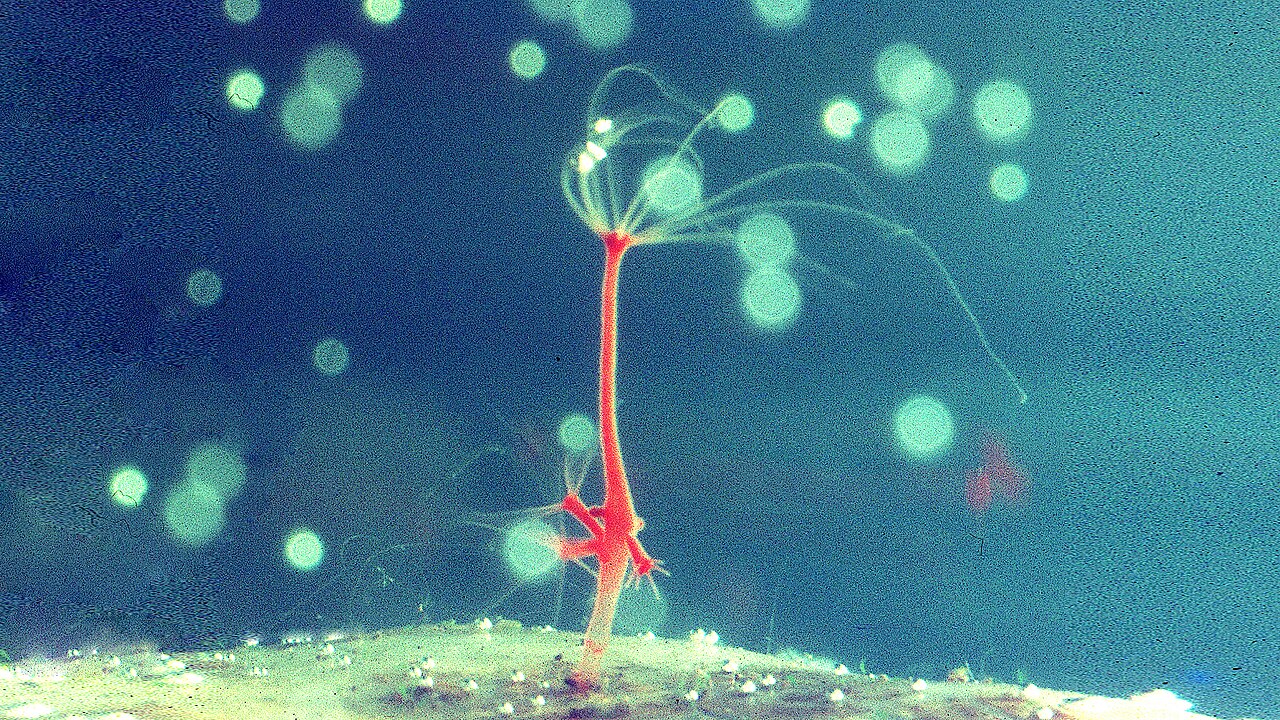
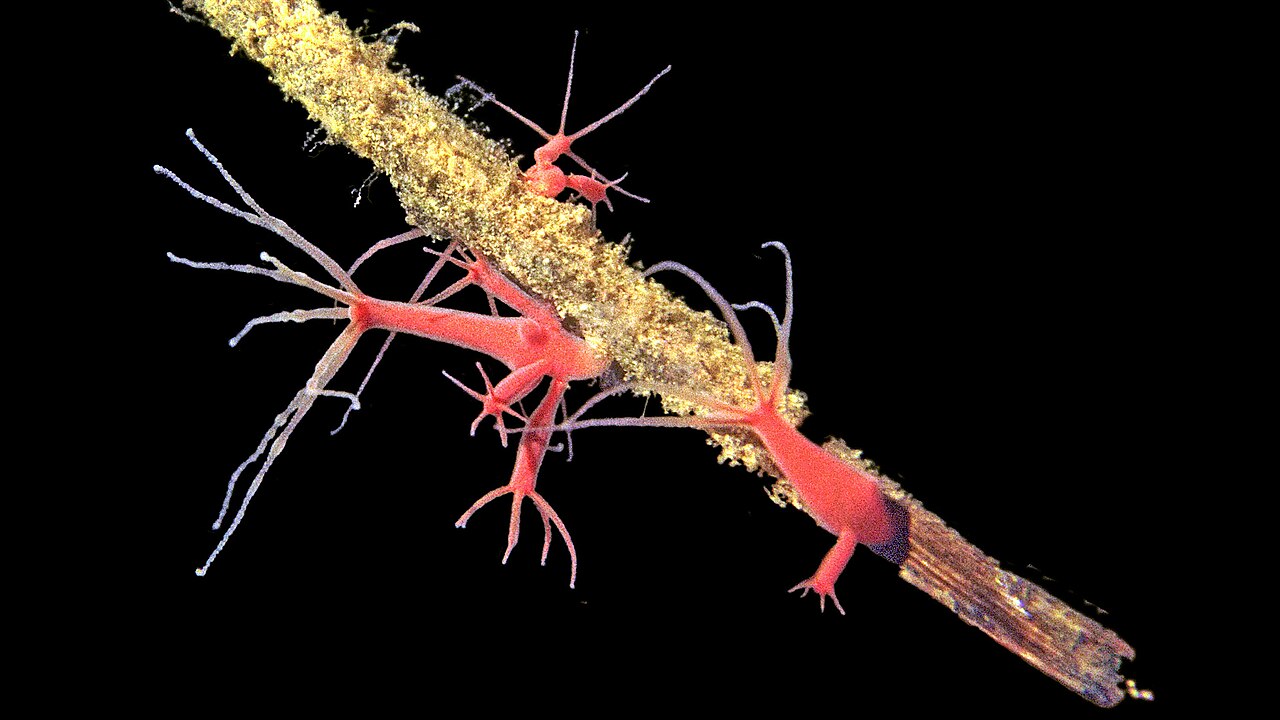
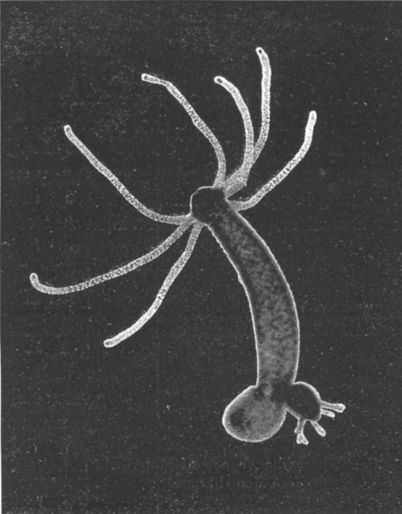
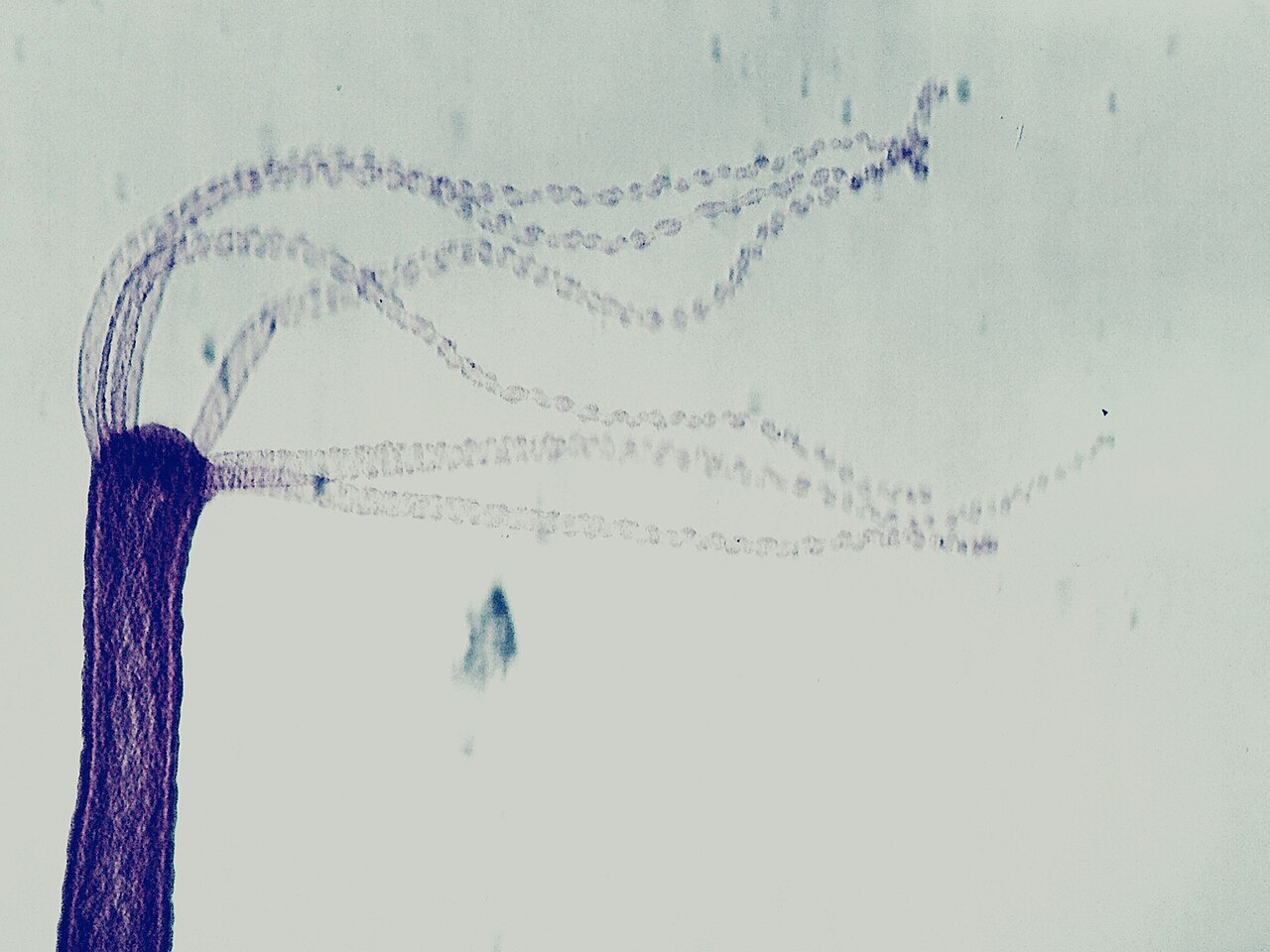
Hydra has a tubular, radially symmetric body secured by a basal disc that secretes a sticky fluid for adhesion. The body wall consists of ectoderm and endoderm separated by mesoglea. At the free end is a mouth surrounded by mobile tentacles clad with cnidocytes containing nematocysts that discharge neurotoxins upon contact with prey. The number of tentacles can change over days, and different types of nematocysts serve distinct functions: desmonemes for attachment, isorhizas with spines, and stenoteles for piercing.
Reader's Guide
Hydra's significance lies in its extraordinary regenerative abilities and apparent lack of senescence. When cut in half, each half regenerates into a small Hydra; even middle slices from multiple segments form both a head and a foot. This capacity, combined with stem cell populations that continually renew themselves, makes Hydra a key model organism for studying regeneration, aging, and stem cell biology. Its simple nerve net, composed of a few hundred to a few thousand neurons, provides insight into the evolution of nervous systems. Hydra also exhibits unique behaviors such as looping and somersaulting locomotion, and a feeding response triggered by glutathione from damaged prey tissue. The genus was named by Linnaeus after the mythical many-headed Hydra because of its regenerative similarity.
Did You Know?
- Hydra does not appear to die of old age or to age at all.
- When a Hydra is cut in half, each half regenerates into a small Hydra.
- Hydra can move by looping or somersaulting, covering several inches in a day.
- The feeding response in Hydra is induced by glutathione released from damaged prey tissue.
Regeneration and the Mythical Namesake
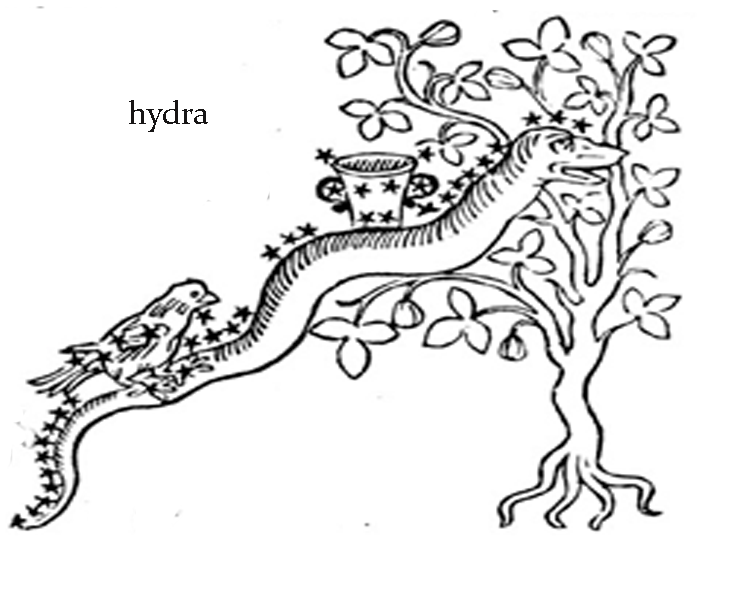
The many-headed serpent that Heracles ultimately slew kept sprouting new heads whenever one was cut off, and the tiny freshwater animal Linnaeus named after it shares that uncanny quality. If a Hydra is sliced in half, the upper fragment grows a new basal disc while the lower fragment regenerates a head and its surrounding tentacles. Slices taken from the middle of the body column develop both ends simultaneously. This extraordinary capacity is underpinned by a population of roughly fifty to one hundred thousand cells organized around three distinct stem-cell lineages that continuously renew themselves throughout the body column. Perhaps most strikingly, researchers have observed that these animals show no apparent signs of senescence; they do not seem to age or die of old age in the way virtually all other metazoans do. It is precisely this combination of relentless regeneration and apparent biological immortality that has made Hydra a perennial favorite in developmental and stem-cell biology laboratories.
Stinging Cells and Body Architecture
A fully extended Hydra measures no more than ten millimeters in length, yet within that compact tubular body lies one of the most sophisticated predatory mechanisms in the animal kingdom. The outer epidermis and inner gastrodermis, two tissue layers separated by a gel-like mesoglea, house specialized stinging cells called cnidocytes. Each cnidocyte encloses a nematocyst, a structure resembling a tiny light bulb with a coiled thread inside, together with a sensory cell and a nerve cell. A short trigger hair, the cnidocil, protrudes from the cell's outer edge. When prey brushes against it, osmotic pressure inside the nematocyst exceeds a critical threshold and the coiled thread is explosively discharged, injecting neurotoxins that can paralyze the victim, especially when hundreds fire simultaneously. Hydra employ several nematocyst variants: desmonemes for gripping prey, spined and spineless isorhizas, and large stenoteles with a prominent stylet for piercing tough cuticle. The number of tentacles bearing these weapons typically ranges from four to eight, though Hydra viridissima can display up to eleven, and an individual may gain or lose a tentacle over a matter of days.
A Nerve Net and Two Ways to Walk
Despite lacking a brain or true muscle tissue, Hydra manages a surprisingly coordinated repertoire of movements using nothing more than a diffuse nerve net of a few hundred to a few thousand neurons. The network operates at two levels: sensory or internal cells at the periphery, and interconnected ganglion cells linked by synapses to epithelial and motor cells. Three major neural circuits extend across the whole body, each selectively recruited for a different action, while a smaller network near the hypostome governs the gentle side-to-side nodding of the tentacles. When threatened, the animal simply retracts its tentacles into small buds and pulls its body column into a tight gelatinous sphere, reacting the same way regardless of stimulus direction, a reflection of the nerve net's simplicity. For locomotion, a sedentary Hydra can loop by bending over, anchoring with its mouth and tentacles, then repositioning its adhesive basal disc, or it can somersault by flipping and reattaching with the foot. Either method covers roughly a hundred millimeters per day. A dark-adapted specimen exposed to light will elongate, bend its hypostome-tentacle junction, and somersault toward the source.
Global Freshwater Presence and Reproductive Strategy
Hydra species are native to temperate and tropical freshwater environments across every continent except Antarctica and the oceanic islands, favoring mesotrophic to eutrophic waters where they cling to submerged rocks via a sticky secretion produced by gland cells in their basal disc. Some individuals are found in open water rather than anchored to a substrate. Respiration and gas exchange occur entirely by diffusion across the epidermal surface, while larger waste products are expelled through the mouth via a rapid radial contraction of the body column. A recently identified bactericide, hydramacin, shields the outer tissue layer from microbial infection. In terms of reproduction, most Hydra species are capable of sexual reproduction under particular environmental conditions, yet they overwhelmingly favor asexual budding. This sets them apart from many other hydrozoans, which alternate between a polyp stage and a free-swimming medusa stage; Hydra never progress beyond the polyp form. The result is a small, solitary, carnivorous animal that has threaded its way into virtually every suitable freshwater ecosystem on Earth while retaining a body plan and life cycle that remain strikingly simple.
Gallery
Frequently Asked Questions
What is Hydra (genus)?
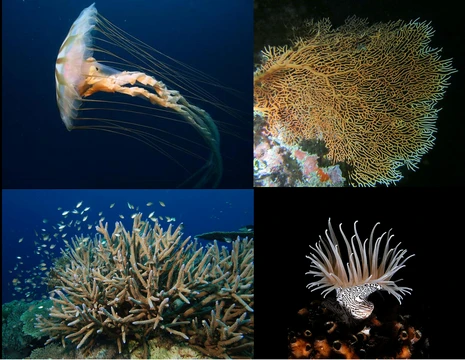
Hydra is a genus of tiny, solitary freshwater animals that belong to the hydrozoan branch of the phylum Cnidaria. They resemble miniature, anchored jellyfish and live attached to surfaces in ponds and slow-moving streams.
Where can you find Hydra in the wild?
They occur on every continent except Antarctica, simply because the freshwater habitats they depend on don't exist there. They also turn up on many oceanic islands that happen to have suitable ponds or streams.
Why do biologists care so much about Hydra?
Hydra can regenerate lost body parts and, strikingly, shows no detectable signs of aging or senescence, giving them an appearance of biological immortality. That combination of regenerative power and lack of aging makes them a go-to model organism for cell-biology research.
What does Hydra eat and how does it feed?
As a carnivore, it waits motionless with its tentacles extended, then fires stinging cells to snare small aquatic prey such as water fleas. The captured food is pulled into a central digestive cavity where it is broken down.
How is Hydra different from other cnidarians like jellyfish or corals?
Unlike colonial corals or free-swimming jellyfish, Hydra lives as a single, sessile polyp exclusively in freshwater rather than marine environments. That simple, solitary body plan is also what makes them so practical for laboratory study.
More in Cnidarians 1-18
Spotted an error? Know more?
This is a living reference — every entry is fact-audited, and reader corrections feed straight into our audit queue. Suggest an edit · See this site's audit record