Lion's mane jellyfish
One of the largest jellyfish, with tentacles longer than a blue whale.

Rosser1954 · CC BY-SA 4.0
The lion's mane jellyfish (Cyanea capillata) is one of the largest known species of jellyfish, noted for its showy, trailing tentacles reminiscent of a lion's mane. Its range is confined to cold, boreal waters of the Arctic, northern Atlantic, and northern Pacific Oceans, and it is common in the English Channel, Irish Sea, North Sea, and western Scandinavian waters.
- field
- Marine biology
- known_for
- One of the largest jellyfish species; longest tentacles of any known animal
- range
- Cold boreal waters of Arctic, northern Atlantic, and northern Pacific Oceans
Lore & Background
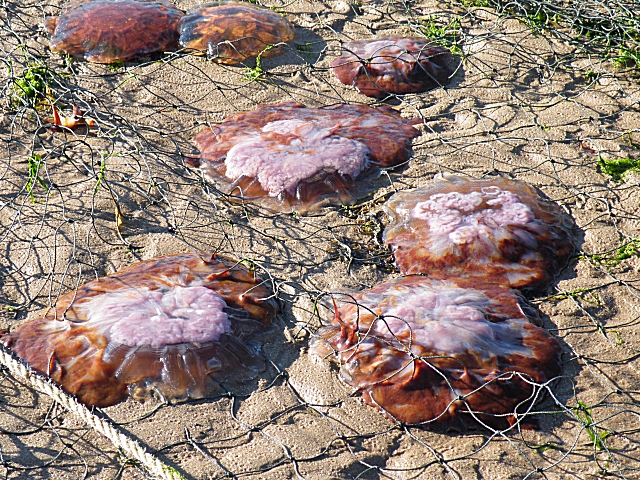
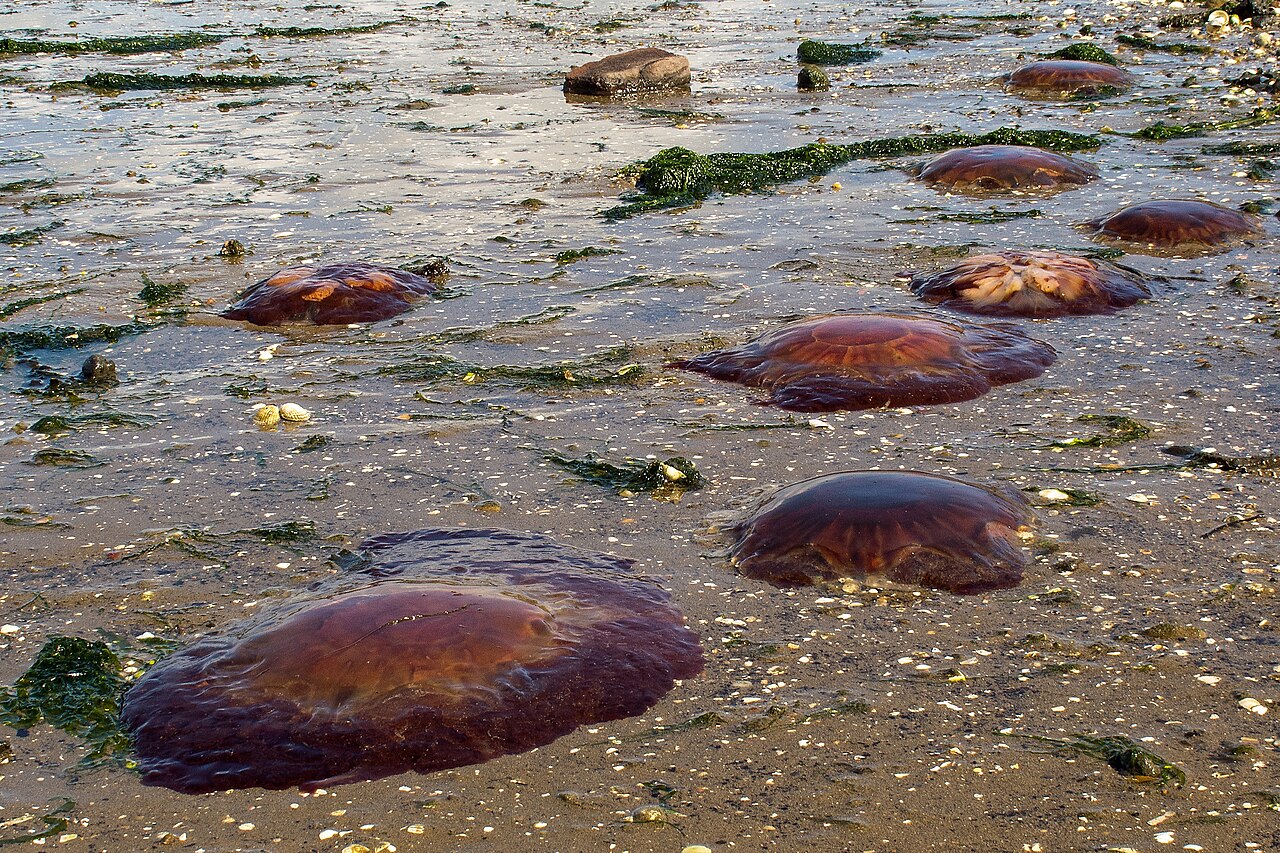
The lion's mane jellyfish is named for its showy, trailing tentacles reminiscent of a lion's mane. It can vary greatly in size: although capable of attaining a bell diameter of over 2 meters, those found in lower latitudes are normally smaller, with a bell about 50 cm in diameter. Larger specimens are typically further offshore than smaller ones. Juveniles are lighter orange or tan, but darken to red and purple as they age. The long, thin tentacles have been characterized as 'extremely sticky' and possess stinging cells.
Reader's Guide
The lion's mane jellyfish is significant as one of the longest known animals in the world, with tentacles of the largest recorded specimen measuring 36.6 meters—longer than a blue whale. Its taxonomy is not fully agreed upon; some zoologists suggest all species within the genus Cyanea should be treated as one. The jellyfish remains mostly near the surface, at no more than 20 meters depth, and depends on ocean currents to travel. It uses stinging tentacles to capture prey such as fish, zooplankton, and smaller jellyfish. Human encounters can cause temporary pain and localized redness, but stings are not known to be fatal in healthy individuals; vinegar can deactivate the nematocysts. The species has been observed below 42°N latitude in larger bays of the East Coast of the United States. Its legacy includes appearing in a Sherlock Holmes story and being the subject of a widely circulated hoax photograph.
Did You Know?
- Its tentacles may retain the ability to sting for up to 25 days after detaching from the jellyfish.
- The leatherback sea turtle feeds almost exclusively on lion's mane jellyfish in large quantities during summer around Eastern Canada.
Physical Form and Extraordinary Scale
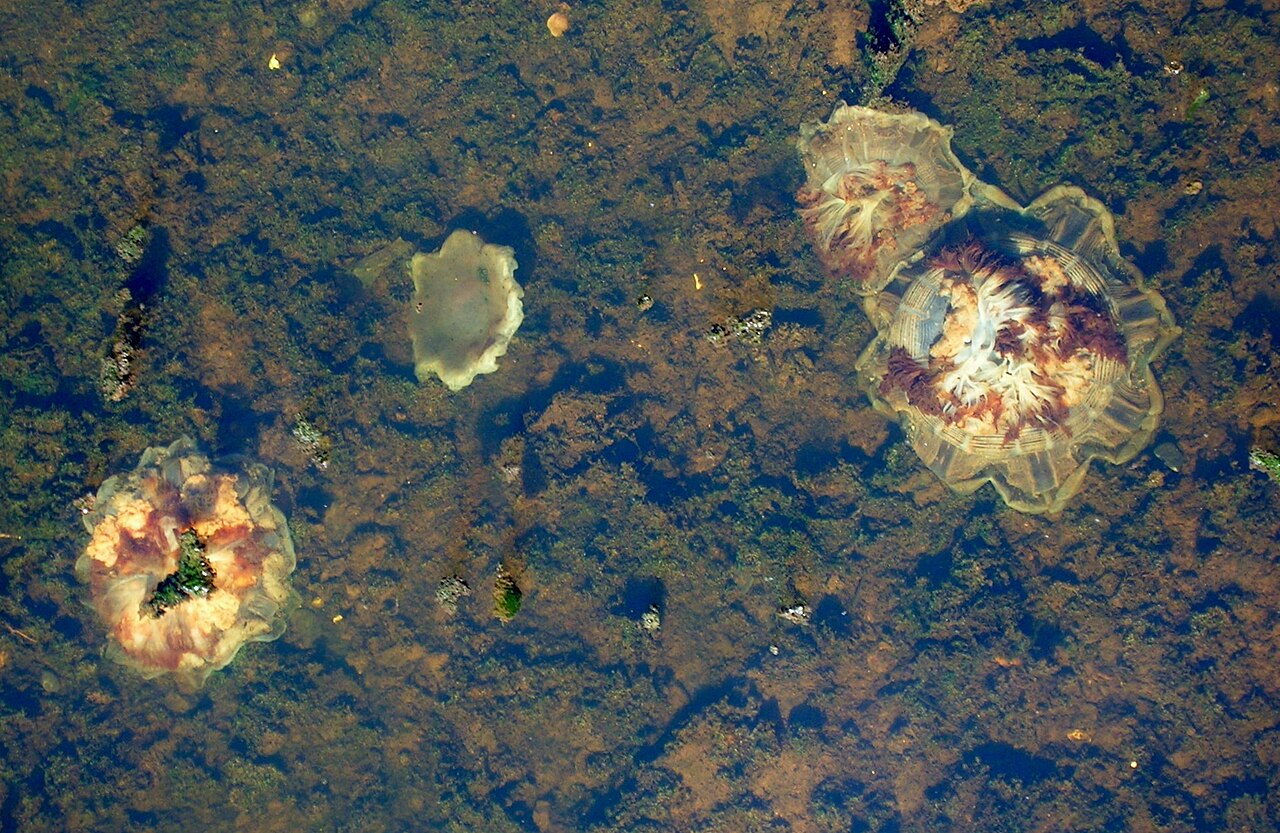
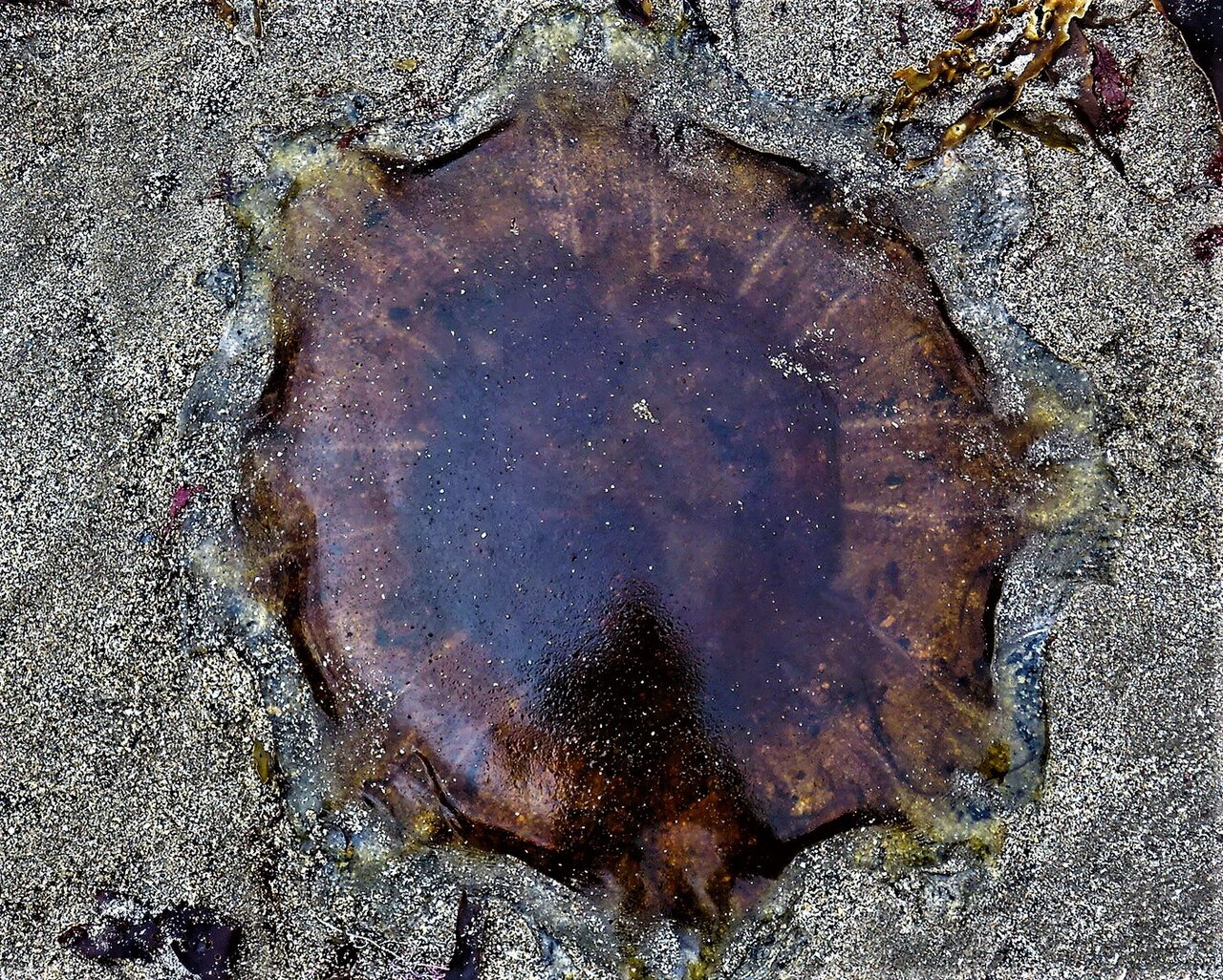
The lion's mane jellyfish earns its name from the dramatic curtain of trailing tentacles that cascade from its bell, evoking the mane of a lion. Unlike the smooth, circular bells typical of most jellyfish, this species presents an eight-lobed structure that resembles an eight-pointed star. The bell margin houses a balance organ called the rhopalium at each of the eight indentations, aiding orientation. Color shifts with age: juveniles appear in pale orange or tan tones, gradually deepening to red and purple as they mature. Size varies considerably by latitude—far northern specimens can exceed two metres in bell diameter, while those in lower latitudes typically hover around 50 centimetres.
Solitary Drift and Year-Long Life Cycle
Lion's mane jellyfish lead a strikingly solitary existence, unlike many pelagic jellyfish that travel in groups. They remain close to the surface, rarely descending beyond 20 metres, and their slow pulsations provide only weak forward propulsion, leaving them largely at the mercy of ocean currents for long-distance movement. They are most frequently encountered in late summer and autumn, when they have grown to their largest size and shifting currents push them toward shore. Their life cycle spans roughly a year and passes through four distinct stages: larva, polyp, ephyrae, and medusa. The female carries fertilized eggs within a tentacle until the larvae are ready to be deposited on a hard surface, where they develop into polyps. These polyps then reproduce asexually, producing stacks of small immature medusae called ephyrae. Each ephyra detaches from the stack and grows independently into a full adult. For prey, the jellyfish uses its stinging tentacles to capture and consume fish, zooplankton, and even smaller jellyfish species.
Boreal Range and Shifting Boundaries
The lion's mane jellyfish is a creature of cold water, with its core range confined to boreal seas across the Arctic, northern Atlantic, and northern Pacific. It is a familiar sight in the English Channel, Irish Sea, North Sea, and western Scandinavian waters as far south as the Kattegat and Øresund. In recent years, periods of increased ocean warming have occasionally pushed individuals beyond their traditional perimeters, including into the southwestern Baltic Sea—though the low salinity there prevents breeding. Similar jellyfish, possibly the same species, have been documented in waters near Australia and New Zealand, hinting at a broader but less understood global presence. Along the eastern coast of the United States, sightings below 42°N latitude have been recorded for some time in larger bays.
Predators, Leatherback Turtles, and Human Encounters
A fully grown lion's mane jellyfish is remarkably well defended against predation, thanks to its enormous size and the dense array of stinging tentacles covering its body. Juveniles, however, face threats from seabirds, larger fish like ocean sunfish, other jellyfish species, and most sea turtles. Anemones have even been documented consuming both adults and young. The leatherback sea turtle stands out as a specialist consumer, feeding almost exclusively on lion's mane jellyfish in large quantities during the summer months around Eastern Canada. For humans, contact with the jellyfish typically causes temporary pain and localized redness. The sting is described as an intense itching or burning sensation, and in normal circumstances it is not fatal to healthy individuals. Vinegar can be used to deactivate the nematocysts. However, if a person encounters a large number of tentacles—particularly if stung across broad areas of the body by both the long trailing tentacles and the roughly 1,200 inner tentacles—systemic effects may occur, and medical attention is strongly recommended.
Gallery

Frequently Asked Questions
Who is Lion's mane jellyfish?
Cyanea capillata is a massive cnidarian whose long, flowing tentacles give it the look of a lion's mane. It is widely recognized as one of the biggest jellyfish species known to science.
What are Lion's mane jellyfish's signature traits?
This species holds the record for the longest tentacles of any known animal, with some reaching nearly 37 meters. Its bell can exceed two meters across, placing it among the longest animals on Earth.
Where does Lion's mane jellyfish live?
It is restricted to cold, boreal waters spanning the Arctic, the northern Atlantic, and the northern Pacific. Sighting it is common in the English Channel, Irish Sea, North Sea, and western Scandinavian coastal waters.
Why is Lion's mane jellyfish important in the cnidarian world?
It stands out as a prime example of how far a jellyfish can grow in both bell size and tentacle length. Its extreme dimensions make it a key reference point for marine biologists studying the upper limits of animal body size.
More in Cnidarians 1-18
Spotted an error? Know more?
This is a living reference — every entry is fact-audited, and reader corrections feed straight into our audit queue. Suggest an edit · See this site's audit record