Chrysaora fuscescens
Pacific sea nettle: a colorful, stinging jellyfish of the northeastern Pacific.

Σ64 · CC BY 4.0
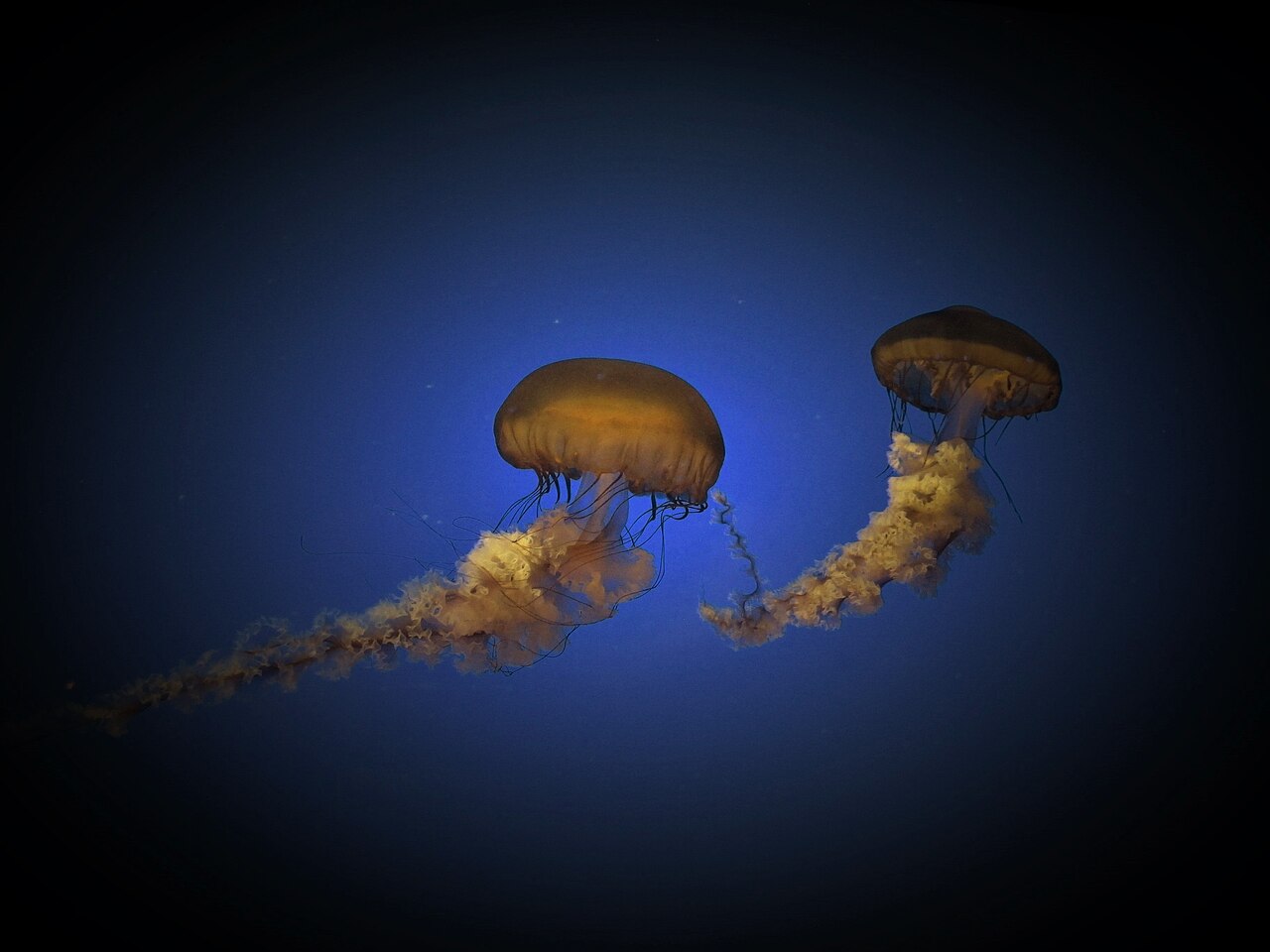
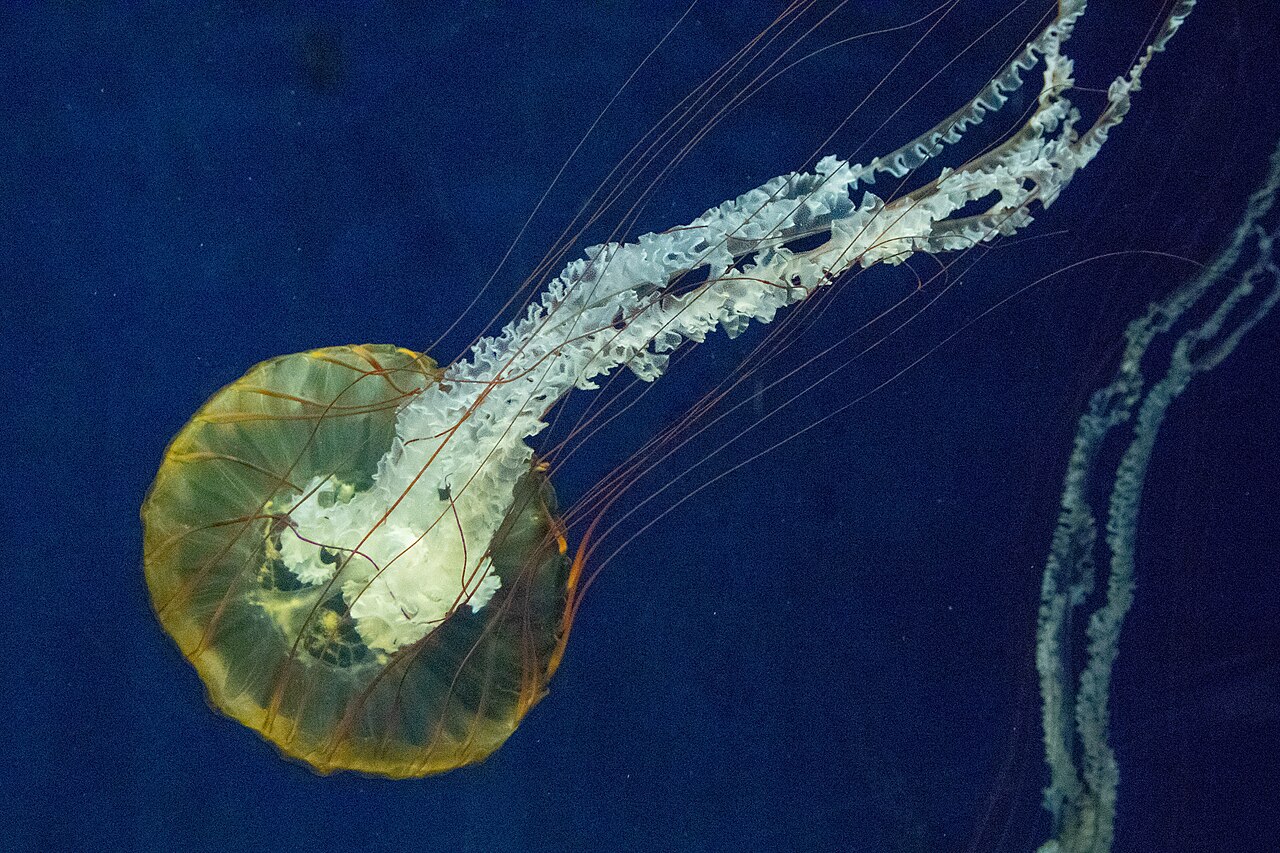
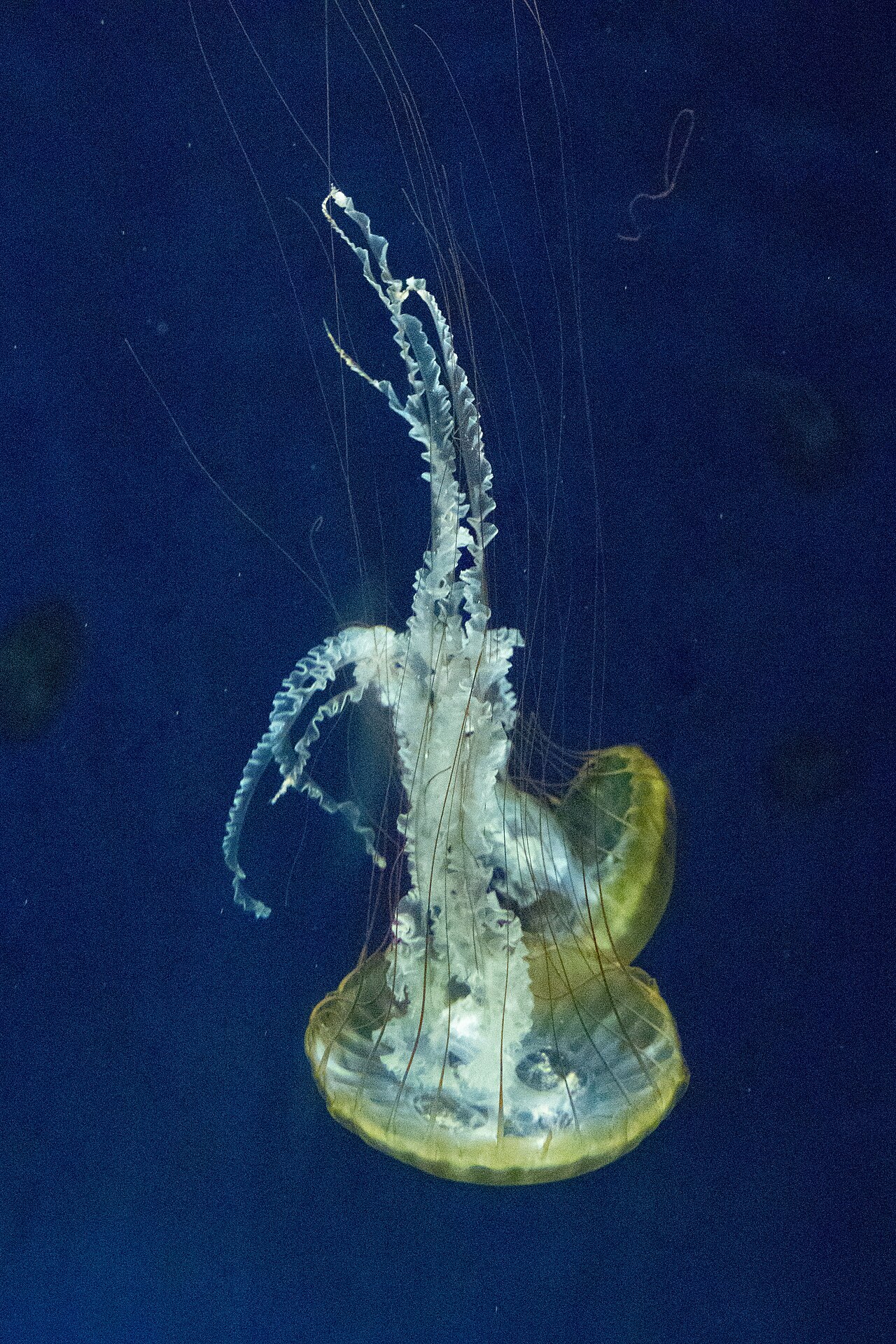
Chrysaora fuscescens, commonly known as the Pacific sea nettle or West Coast sea nettle, is a widespread jellyfish found in the northeastern Pacific Ocean from British Columbia to Mexico. It is notable for its distinctive golden-brown bell with a reddish tint, long maroon tentacles, and a defensive sting that is irritating but rarely dangerous to humans. Since the mid-20th century, it has become a popular exhibit in aquariums due to its bright colors and low-maintenance care requirements.
- known_for
- Bright golden-brown bell, long tentacles (up to 3–4 m), popular aquarium species
Lore & Background
Its genus name comes from Greek mythology—Chrysaor, brother of Pegasus, son of Poseidon and Medusa—meaning 'he who has a golden armament,' referencing the goldenrod color of the bell. The species name fuscescens is Latin for 'becoming dark' or 'darkish.' The common name 'sea nettle' refers to its defensive sting, similar to that of the stinging nettle plant.
Reader's Guide
The Pacific sea nettle is significant both ecologically and in public display. Ecologically, it is a carnivorous drifter that feeds on zooplankton, fish eggs, and other jellyfish, using nematocyst-laden tentacles. Its populations have increased off Oregon, possibly due to climate change or nutrient pollution from human runoff, which fuels algal blooms and the food chain. This abundance has reduced fish populations and clogged fishing nets, making it a nuisance to fishermen. In captivity, it is valued for its bright colors and low maintenance, and can be bred via polyp culturing. Its sting, while irritating, is rarely dangerous to humans. The species also serves as prey for marine birds, large fish, cetaceans, and leatherback turtles.
Did You Know?
- The Pacific sea nettle's bell can grow up to about 50–60 cm in diameter in the wild, though most are less than 50 cm across.
- Its tentacles can trail up to 3–4 meters (10–13 feet) behind the jellyfish.
- The species name fuscescens is Latin for 'becoming dark' or 'darkish.'
- Copepods are common in the diet of C. fuscescens, but studies show they primarily feed on a variety of zooplankton, including copepods, fish eggs, and other small organisms.
Appearance and Physical Form
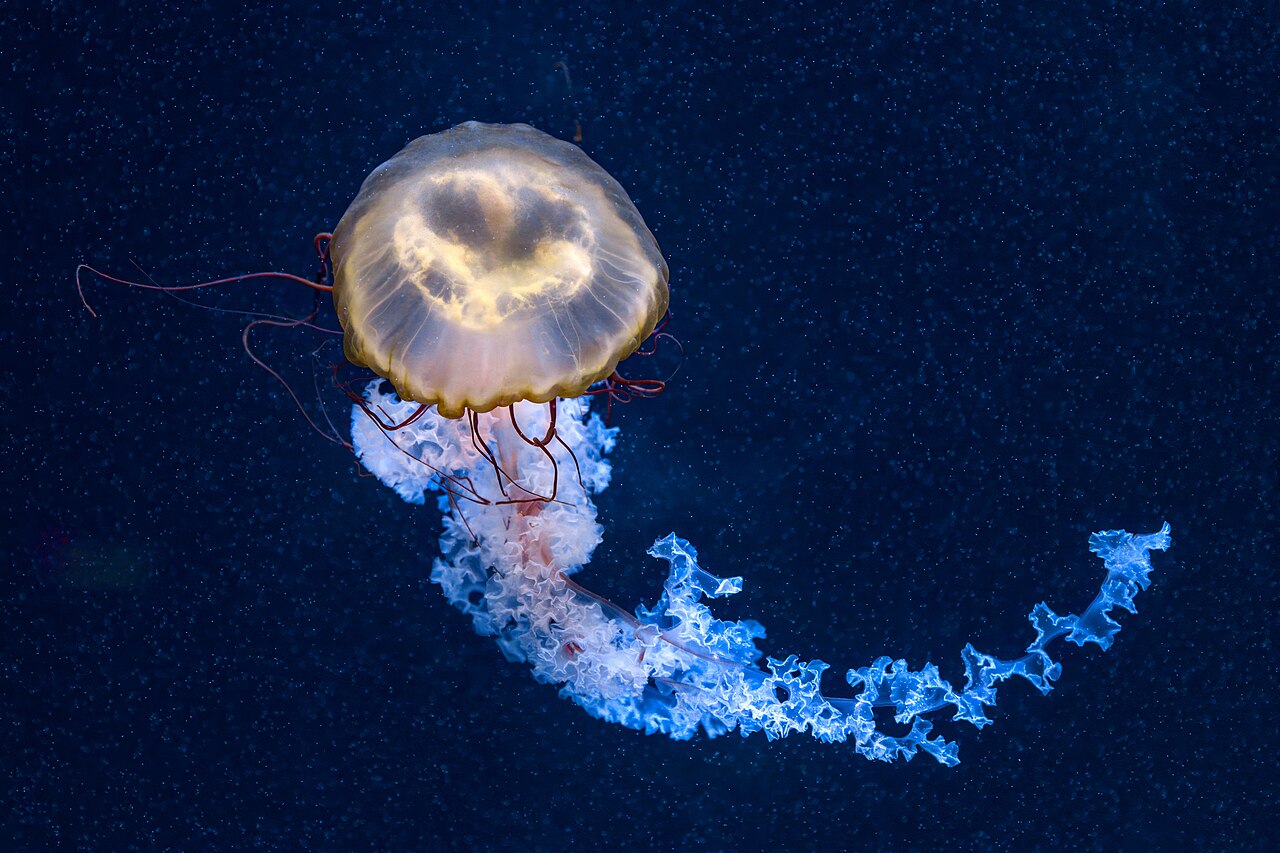
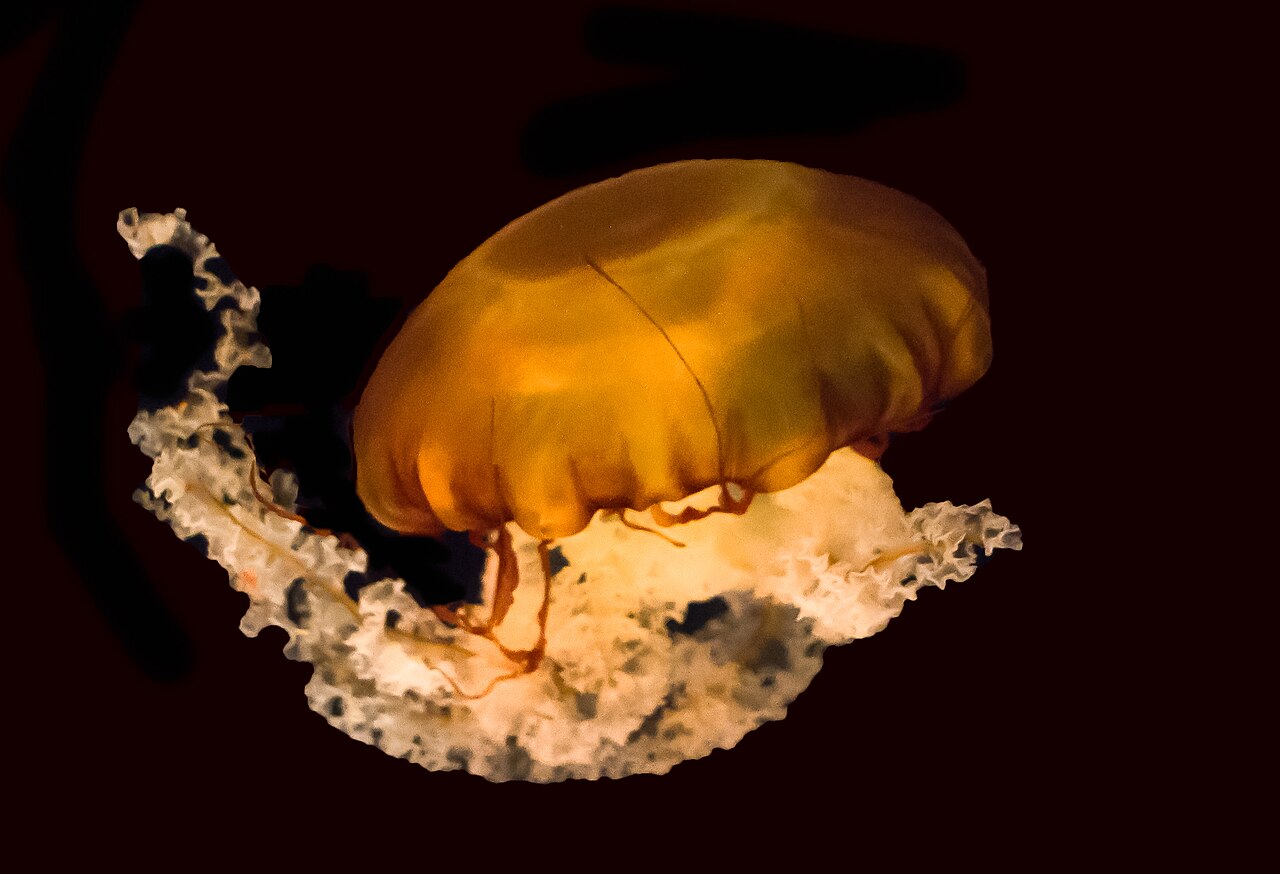
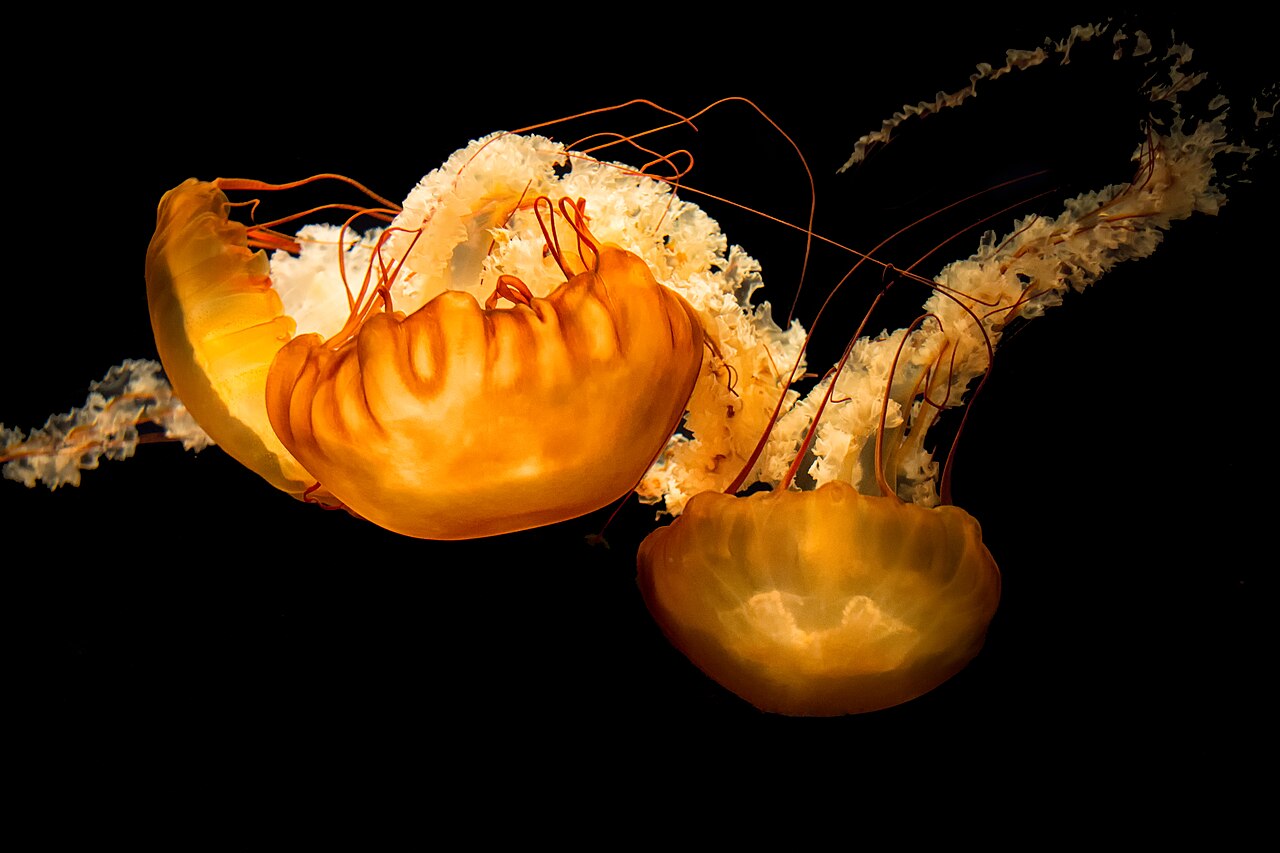
The Pacific sea nettle presents one of the most striking visual profiles among marine cnidarians. Its bell takes on a golden-brown hue with a reddish undertone, a coloration so distinctive that it inspired the genus name Chrysaora, derived from the Greek mythological figure Chrysaor—literally "he who has a golden armament." In the wild, the bell can exceed one meter in diameter, though most individuals measure under 50 centimeters. Trailing behind the bell are 24 undulating maroon tentacles alongside long, spiraling whitish oral arms that can stretch as far as 15 feet. The species propels itself through water by contracting its bell and expelling water behind it, a jet-propulsion mechanism that lets it swim against currents, though it spends most of its time simply drifting. Small light-sensing organs called ocelli help the nettle detect changes in illumination, guiding its migration from deeper waters toward the surface.
Feeding Ecology and Predation
As a drift feeder, the Pacific sea nettle cannot pursue its prey. Instead, it spreads its tentacles wide like a net, waiting for food to pass within reach. When contact occurs, thousands of nematocysts fire barbed stingers that inject venom containing proteases and pore-forming toxins capable of disrupting cell membranes. The oral arms then begin external digestion before transporting the meal into the mouth. The nettle's diet spans a broad range: zooplankton, crustaceans, salps, pelagic snails, small fish, their eggs and larvae, and even other jellyfish. Analyses of gut contents suggest a preference for slow-moving or non-motile prey, with copepods frequently dominating. Despite its potent sting, the species is far from invulnerable. Marine birds, large fish, and certain cetaceans consume it without apparent ill effect, while leatherback turtles are especially fond of it. In recent years, dense swarms off Oregon have clogged commercial fishing nets and interfered with scientific trawls and water-intake systems, making the nettle a growing nuisance to coastal industries.
Reproductive Life Cycle
The Pacific sea nettle employs a dual reproductive strategy, alternating between sexual and asexual phases across its life cycle. In the medusa stage, females capture sperm released by males and hold the fertilized eggs in their mouths, where they remain attached to the oral arms. The eggs develop into flat, bean-shaped planula larvae—the free-swimming juvenile form shared by all cnidarians. Once these larvae mature into flower-shaped polyps, they are released into the water column, where they settle onto a solid substrate. In this polyp stage, reproduction becomes entirely asexual: the organism produces genetically identical clones through budding, with new polyps growing from the sides of the parent. Each new polyp is eventually released, undergoes metamorphosis, and develops a bell, arms, and tentacles until it becomes a fully formed medusa, ready to re-enter the sexual phase. In captivity, this polyp stage can be cultured to breed new medusae under ideal conditions.
Distribution, Population Dynamics, and Human Interaction
Chrysaora fuscescens inhabits temperate to cooler waters along the northeastern Pacific, from southern British Columbia and the Gulf of Alaska down through Washington, Oregon, and most of California to Baja California Sur, with rare sightings in the Gulf of California and even off Japan. Populations peak in late summer. Since the mid-twentieth century, the species has become a staple of public aquariums and zoos with aquatic exhibits, prized for its vivid coloration and extraordinarily long trailing tentacles, and valued by keepers for its relatively low maintenance requirements. However, in recent years the nettle has become overly abundant off Oregon's coast. Scientists debate the cause: some point to climate change as a driver, while others attribute the surge to human pollution—industrial runoff, agricultural waste, and chemical discharge adding excess nutrients that fuel algal blooms and, by extension, the entire food chain the nettle depends on.
Gallery
Frequently Asked Questions
Who is Chrysaora fuscescens?
Chrysaora fuscescens is a cnidarian jellyfish commonly called the Pacific sea nettle or West Coast sea nettle. It is one of the most recognizable stinging jellies native to the northeastern Pacific.
What does Chrysaora fuscescens look like?
It displays a golden-brown bell with a reddish cast and long maroon tentacles that can reach roughly three to four meters in length. That vivid coloration makes it one of the most visually striking jellyfish in its range.
Where does Chrysaora fuscescens live?
This species is found along the northeastern Pacific coast, stretching from British Columbia down to Mexican waters. It is a widespread and frequently encountered resident of that stretch of ocean.
Is Chrysaora fuscescens dangerous to humans?
Its sting produces an irritating, locally painful reaction but is rarely life-threatening. Most swimmers who brush against it experience a temporary burn rather than a serious medical event.
Why is Chrysaora fuscescens a popular aquarium species?
Since the mid-twentieth century its bright bell and flowing tentacles have made it a crowd-pleaser in both public and home tanks. It is also comparatively low-maintenance, which keeps it accessible to smaller facilities and hobbyists.
More in Cnidarians 1-18
Spotted an error? Know more?
This is a living reference — every entry is fact-audited, and reader corrections feed straight into our audit queue. Suggest an edit · See this site's audit record