Turritopsis dohrnii
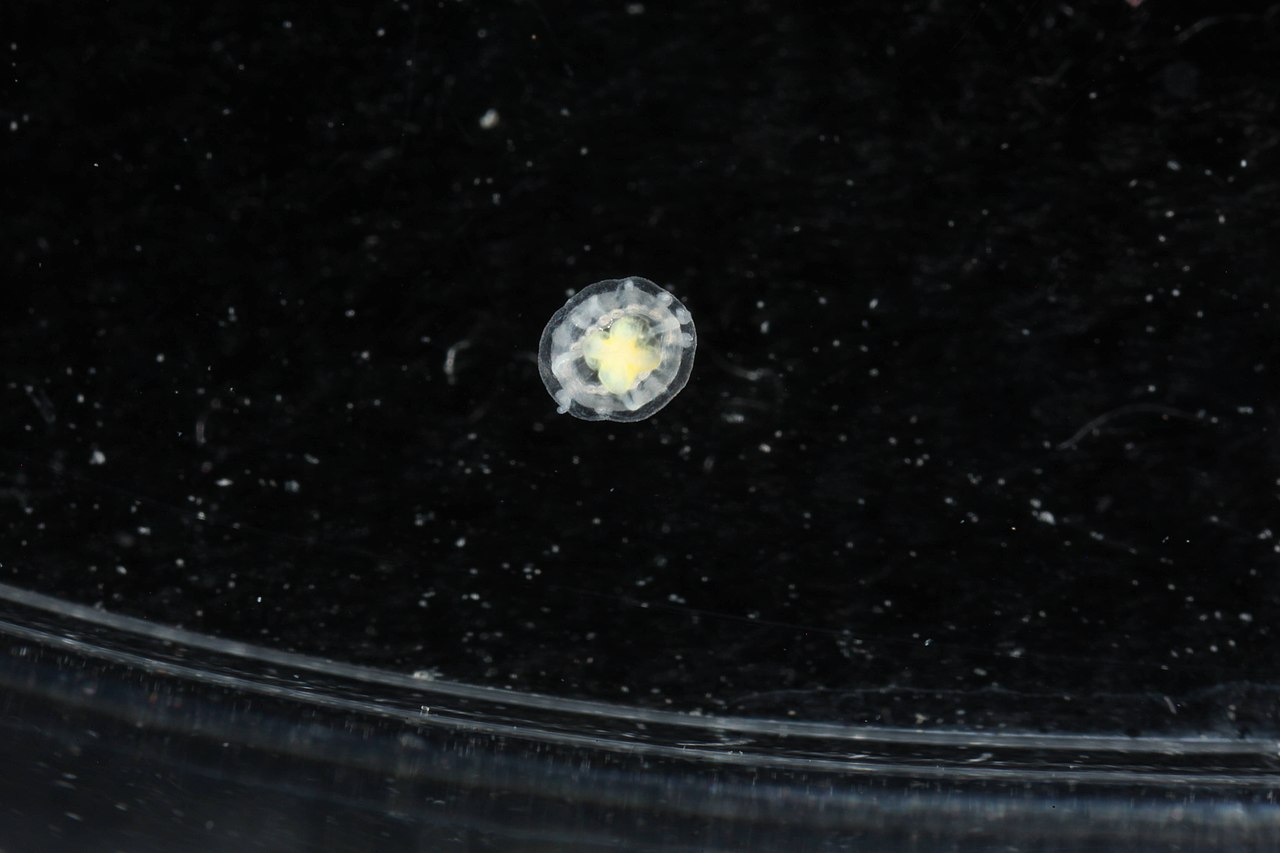
A small jellyfish capable of reverting to its polyp stage.

Unknown author · Public domain
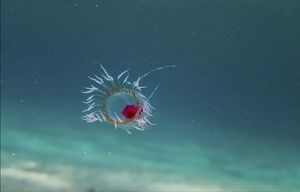
Turritopsis dohrnii, commonly known as the immortal jellyfish, is a species of small, biologically immortal Medusozoa found worldwide in temperate to tropic waters. It is one of the few known cases of an animal capable of completely reverting to a sexually immature, sedentary polyp colonial stage after having reached sexual maturity as a solitary individual, a process that theoretically can go on indefinitely, rendering it biologically immortal.
- field
- Marine biology, zoology
- known_for
- Biological immortality through transdifferentiation
- maximum_diameter
- about 4.5 mm
- diet
- Carnivorous; zooplankton, fish eggs, small mollusks
- temperature_range
- 14 to 25 °C
Lore & Background
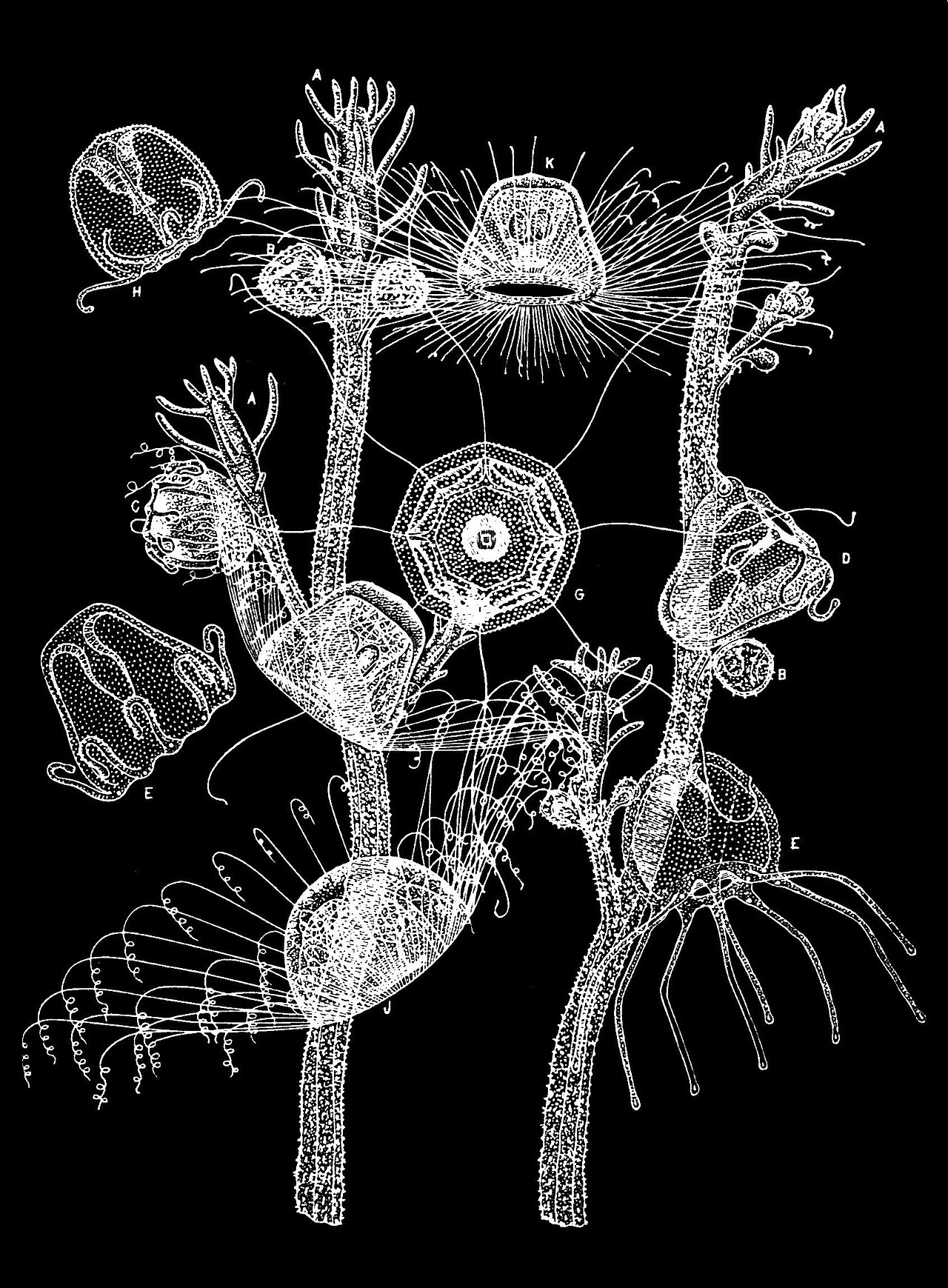
Turritopsis dohrnii begins its life as a tiny, free-swimming larva called a planula. The planula settles and gives rise to a colony of polyps attached to the sea floor, which form an extensively branched structure. Medusae (jellyfish) bud off these polyps and become free-swimming, eventually reaching sexual maturity. When sexually mature, they prey on other jellyfish species at a rapid pace. If exposed to environmental stress, physical assault, sickness, or old age, the medusa can revert to the polyp stage through transdifferentiation, a process that alters the differentiated state of cells into new types. This reversal can theoretically occur indefinitely, though in practice most individuals die from predation or disease.
Reader's Guide
Turritopsis dohrnii is significant primarily for its biological immortality, a rare trait in the animal kingdom. Its ability to reverse its life cycle via transdifferentiation has made it an important subject in basic biological aging and pharmaceutical research. The species also demonstrates unique telomere maintenance mechanisms that reset cellular aging during life cycle reversal. Its global spread, likely through ballast water discharge, has been described as a 'worldwide silent invasion' due to its tiny size and innocuity. The species' cell development method has inspired scientists to explore using transdifferentiation to renew damaged or dead tissue in humans. Despite its theoretical immortality, most individuals in nature succumb to predation or disease without reverting to the polyp form.
Did You Know?
- The medusa of T. dohrnii has a maximum diameter of about 4.5 mm and a bright red, cruciform stomach.
- About 20–40% of mature medusae revert to stolons and polyps without passing through a cyst-like stage.
- The species is believed to have originated in the Pacific and spread worldwide through trans-Arctic migrations and ballast water discharge.
Gallery
Frequently Asked Questions
Who is Turritopsis dohrnii?
Turritopsis dohrnii, nicknamed the immortal jellyfish, is a tiny Medusozoa species that inhabits temperate and tropical seas around the globe. It measures roughly 4.5 mm at its widest and is one of the most talked-about entries in the Cnidarians catalog.
What are Turritopsis dohrnii's powers or special abilities?
Its signature trait is transdifferentiation: once it has matured into a free-swimming medusa, it can collapse its adult cells and rebuild itself as a sedentary, sexually immature polyp colony. Because this reset can theoretically repeat without limit, the organism is considered biologically immortal.
How does Turritopsis dohrnii's story end?
In the canonical sense, it doesn't have a fixed ending. The medusa-to-polyp-to-medusa cycle can loop indefinitely, so the only way the individual truly stops is through predation, disease, or environmental stress rather than aging.
Why is Turritopsis dohrnii important in the Cnidarians series?
It is one of the very few documented animals that can fully revert to a juvenile colonial form after reaching sexual maturity, making it a cornerstone subject in marine biology and aging research. Its existence challenges the usual assumption that senescence is unavoidable in multicellular life.
What does Turritopsis dohrnii eat and where does it live?
It is a small carnivore that snags zooplankton, fish eggs, and tiny mollusks from the water column. It thrives in waters between roughly 14 °C and 25 °C, which is why it shows up in both temperate and tropical marine habitats worldwide.
More in Cnidarians 1-18
Spotted an error? Know more?
This is a living reference — every entry is fact-audited, and reader corrections feed straight into our audit queue. Suggest an edit · See this site's audit record