Portuguese man o' war
A colonial siphonophore with a venomous sting and gas-filled sail.

Jules Verne Times Two · CC BY-SA 4.0
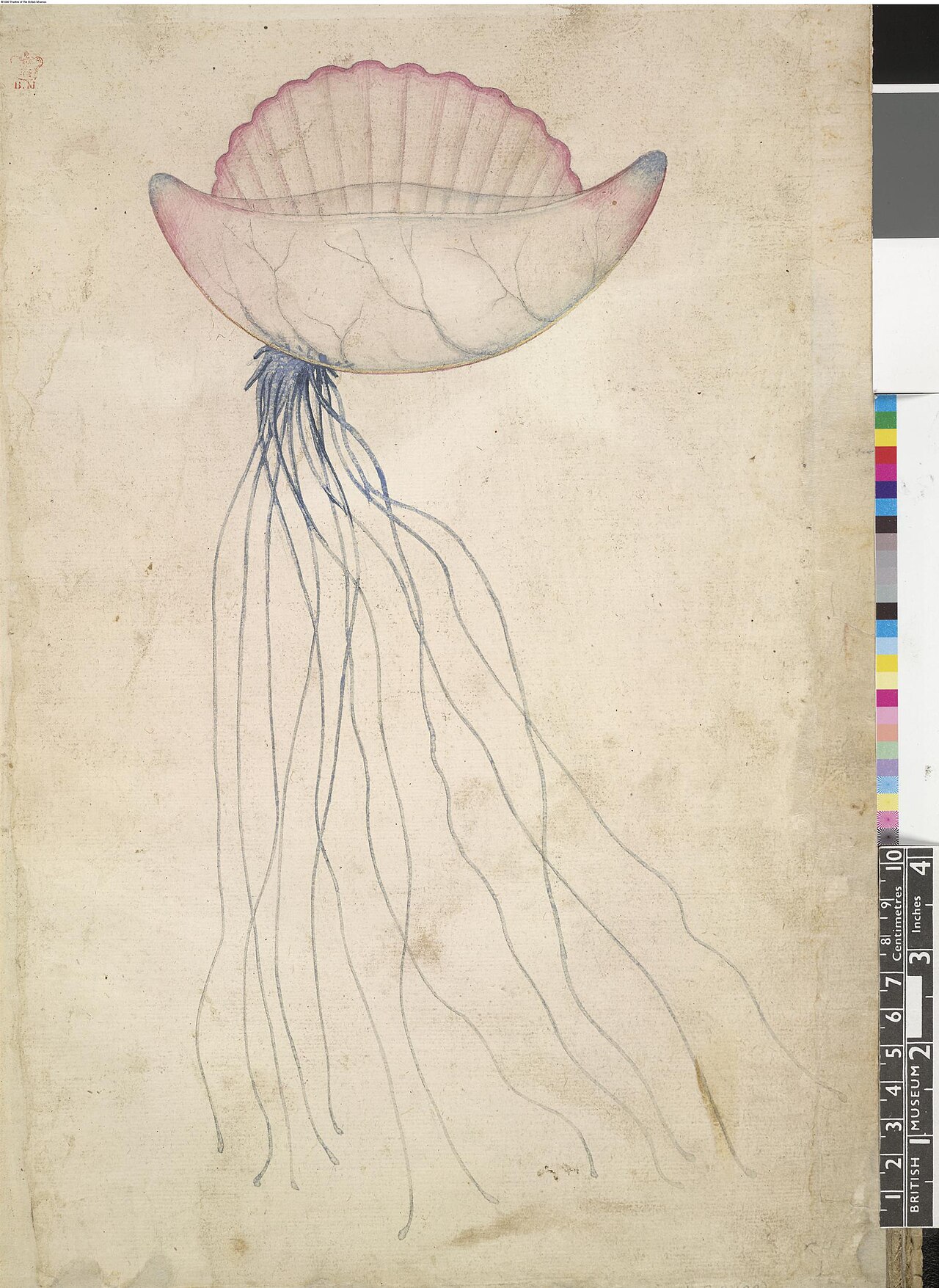
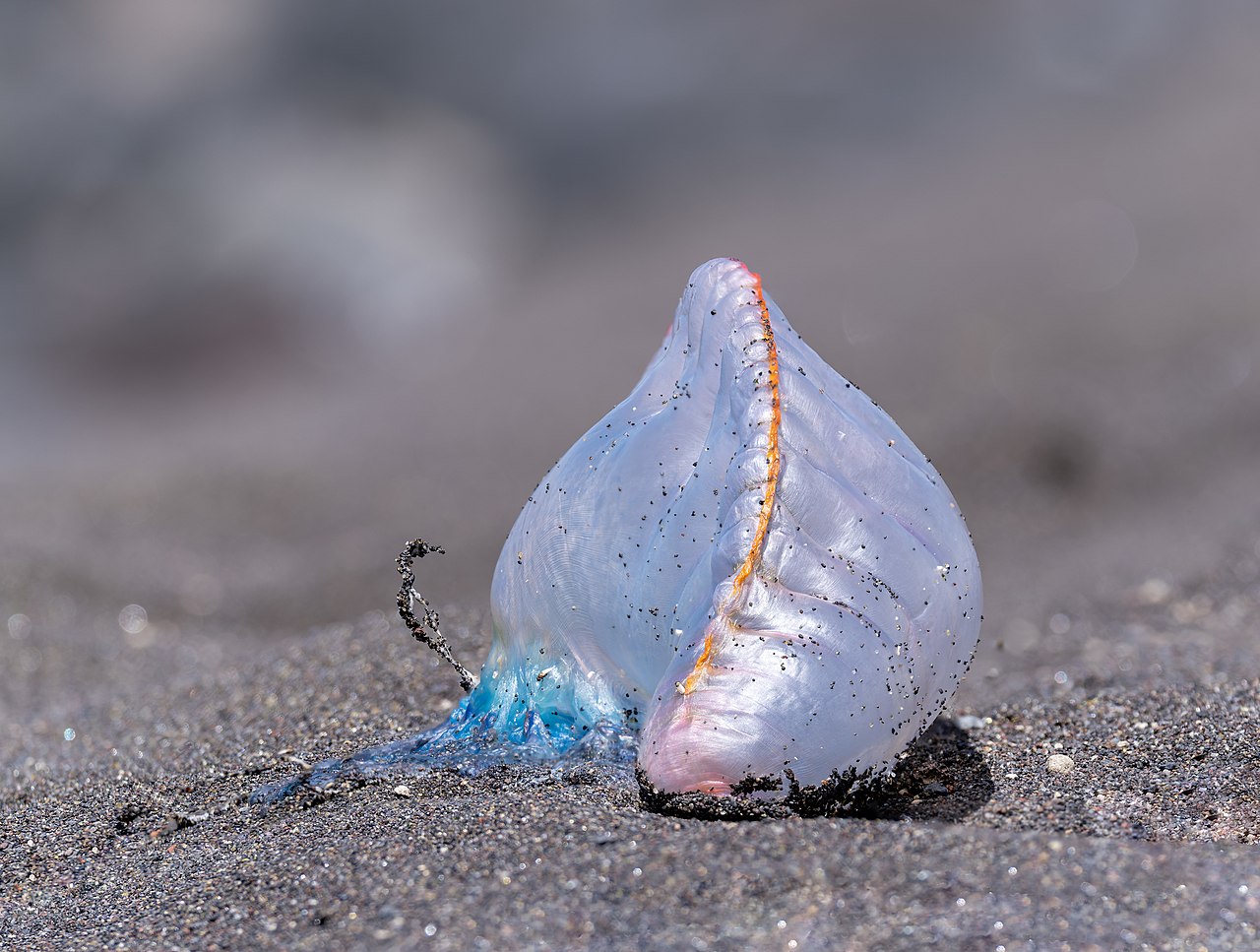
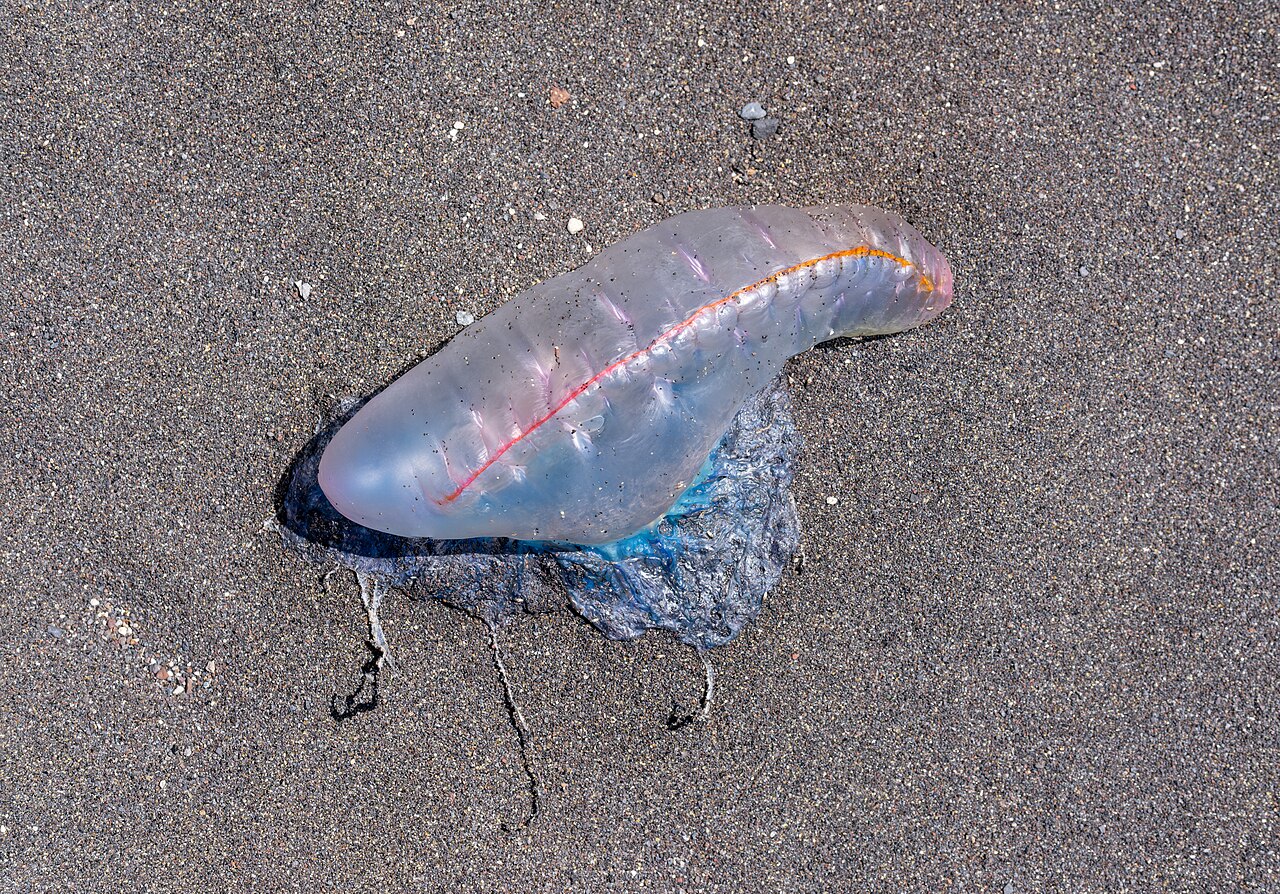
The Portuguese man o' war (Physalia physalis) is a marine hydrozoan found in the Atlantic, Indian, and Pacific oceans. Although it superficially resembles a jellyfish, it is actually a siphonophore—a colonial organism made up of many smaller units called zooids that are genetically identical but fulfill specialized functions such as hunting, digestion, and reproduction. It is known for its venomous sting, which can kill fish, crustaceans, and in some cases, humans.
- Scientific name
- Physalia physalis
- Also known as
- Man-of-war, bluebottle, Caravela Portuguesa
- Type
- Siphonophore (colonial hydrozoan)
- Habitat
- Atlantic, Indian, and Pacific oceans (neuston, living on the water surface)
- Pneumatophore size
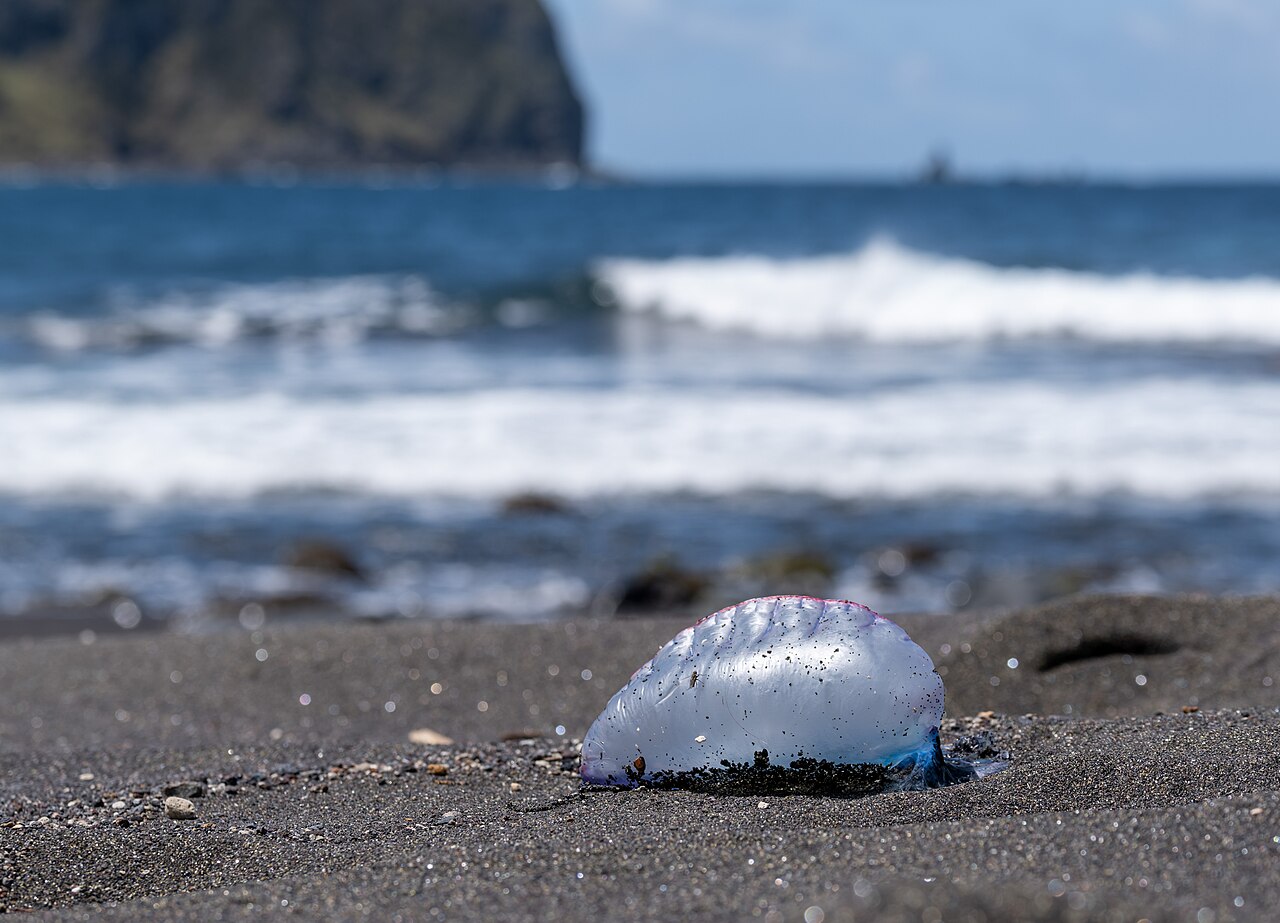
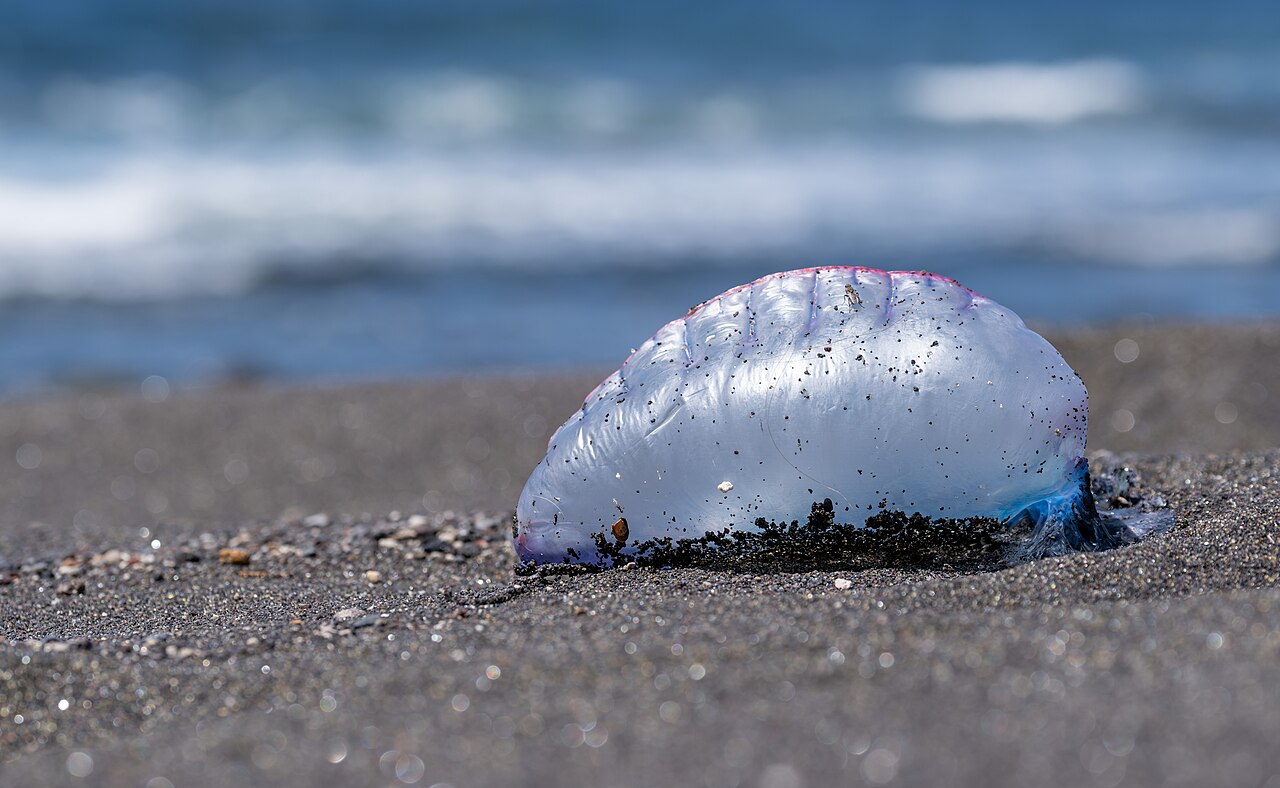
- Over 30 cm (12 in) long, 13 cm (5 in) wide, 15 cm (5.9 in) tall
- First described by
- Carl Linnaeus in the 10th edition of Systema Naturae
Lore & Background
The Portuguese man o' war was first described by Carl Linnaeus in the 10th edition of his Systema Naturae under the name Holothuria physalis. Its name comes from the man-of-war sailing warship, due to its resemblance to the Portuguese caravel at full sail. The genus and species names derive from the Greek word physalis, meaning 'bubble' or 'bladder'.
Reader's Guide
The Portuguese man o' war is significant as a prominent member of the neuston community, living at the ocean surface and relying on a gas-filled pneumatophore for buoyancy and a sail for wind-driven movement. Its venomous cnidocytes can deliver a sting powerful enough to kill fish, crustaceans, and occasionally humans. physalis from the Atlantic, P. utriculus found worldwide, P. minuta from the Southwest Pacific, and P. megalista from the South Pacific, South Atlantic, and South Indian oceans. In 2025, Physalia mikazuki was described as a new species from Japan. This taxonomic uncertainty highlights ongoing research into siphonophore diversity. The man o' war's colonial nature—where genetically identical zooids perform specialized roles—makes it a key example of biological organization between individual and colony.
Did You Know?
- The Portuguese man o' war is not a jellyfish but a siphonophore, a colonial organism made of many genetically identical zooids.
- Its gas-filled pneumatophore can contain up to 13% carbon monoxide, actively produced by the animal.
- Genetic evidence suggests there may be at least four distinct species within the genus Physalia.
Gallery
Frequently Asked Questions
Who is Portuguese man o' war?
It is a colonial marine hydrozoan (siphonophore) that drifts across the surface of the Atlantic, Indian, and Pacific Oceans. Rather than being a single animal, it is a super-organism composed of many genetically identical zooids, each dedicated to a specific task like stinging, feeding, or reproduction.
What are Portuguese man o' war's powers or abilities?
Its trailing tentacles can reach roughly 30 metres and deliver a venom potent enough to subdue fish, crustaceans, and occasionally injure or kill humans. A rigid, gas-filled pneumatophore over 30 cm long functions as both a buoyancy organ and a wind-catching sail, letting the colony ride surface currents and breezes.
How does Portuguese man o' war's story end?
There is no single dramatic finale; colonies eventually die when their float deflates, they are eaten by predators such as sea turtles, or they break apart in storms. Before that, individual zooids bud new colonies asexually or release gametes sexually, so the lineage simply continues drifting into open water.
Why is Portuguese man o' war important?
As a neuston predator it helps keep small-fish and plankton populations in check across three ocean basins. It also provides a critical food source for sea turtles and other surface-feeding animals, making it a linchpin in coastal and open-ocean food webs.
Is Portuguese man o' war actually a jellyfish?
No. True jellyfish are single polyps, whereas the Portuguese man o' war is a siphonophore—a colony of specialized zooids (dactylozooids for stinging, gastrozooids for digestion, gonozooids for reproduction) that act as one coordinated unit. This colonial architecture is what gives it its extraordinary tentacle length and division of labour.
More in Cnidarians 1-18
Spotted an error? Know more?
This is a living reference — every entry is fact-audited, and reader corrections feed straight into our audit queue. Suggest an edit · See this site's audit record